


Work
Work
About
About
Improving inventory accuracy with a scan-first, location-based workflow
This project focuses on improving inventory operations in a fast-paced warehouse environment, where staff work across multiple tasks and frequent interruptions.
The existing system didn’t reflect how work actually happens, creating unnecessary opportunities for errors. The goal was to redesign the workflow to better align with real-world operations and improve inventory accuracy.
Lead Product Designer
Mobile Web App
2022
The problem
High order defect rates were impacting customers and business performance.
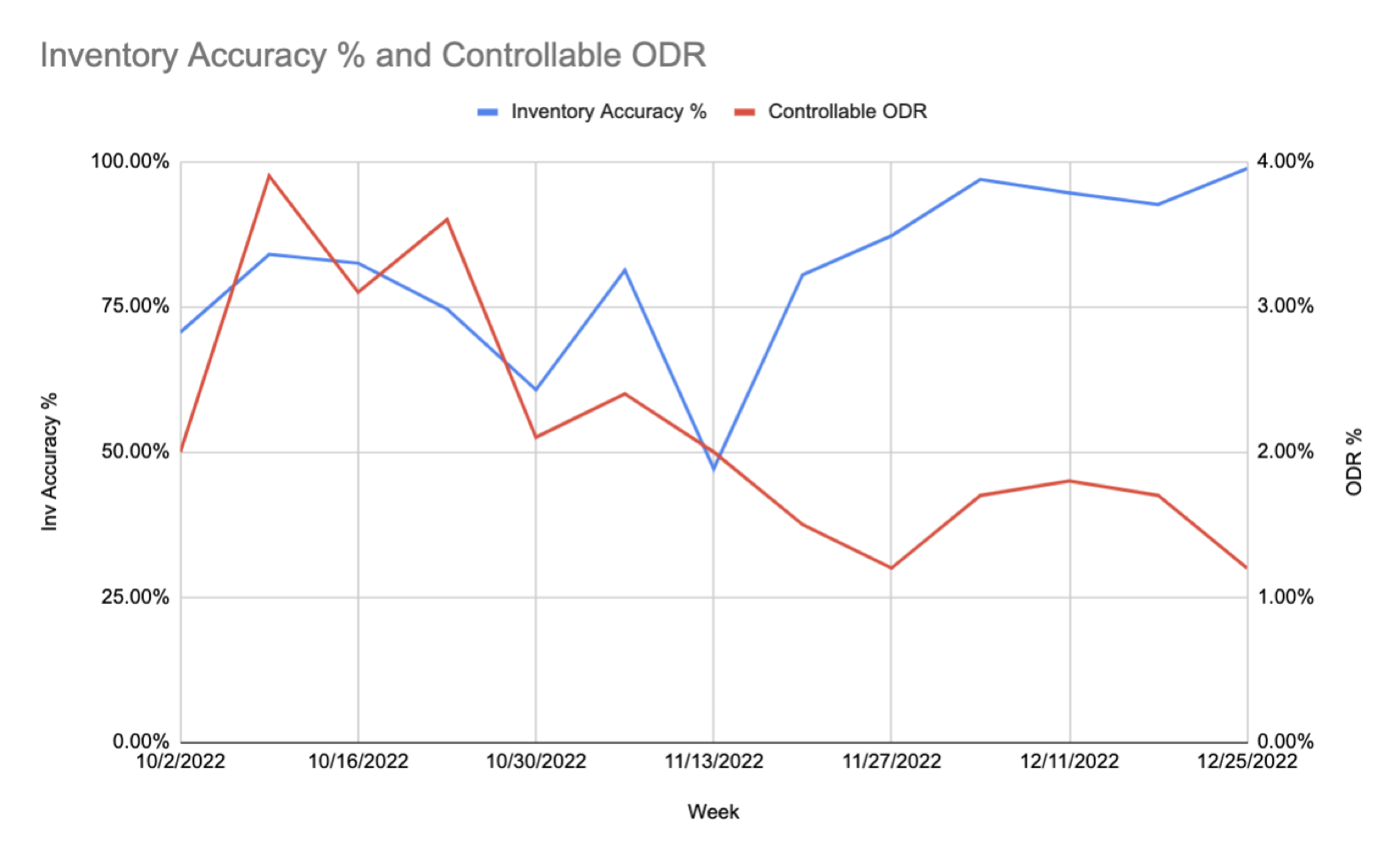
We were seeing consistently high defect rates, with controllable ODR staying above 4%, leading to poor customer experience, increased refunds, and operational inefficiencies.
Through our analysis, we identified a strong correlation between ODR and low inventory accuracy, which was hovering around 70%, making it a key driver of defects and a primary lever for improvement.
Understanding the real workflow
To better understand this gap, we studied active facilities through shadowing, live usability sessions, and hands-on observation so the redesign reflected interruptions, movement, and physical constraints.
The research showed that the errors were systemic, not individual. Across sites, the same themes repeated: people worked by location, the system forced manual translation, and interruptions made it easy for context to disappear, but the system did not support how work actually happened on the floor.
- Loose workflows: Users had too much freedom in critical tasks, which made it easy to skip steps or improvise around guardrails.
- No physical mapping: Staff had to translate between the warehouse and the interface manually because digital tasks were not anchored to real locations.
- Interrupted work: Flows assumed uninterrupted, linear work even though tasks were fragmented and staff regularly switched context midstream.
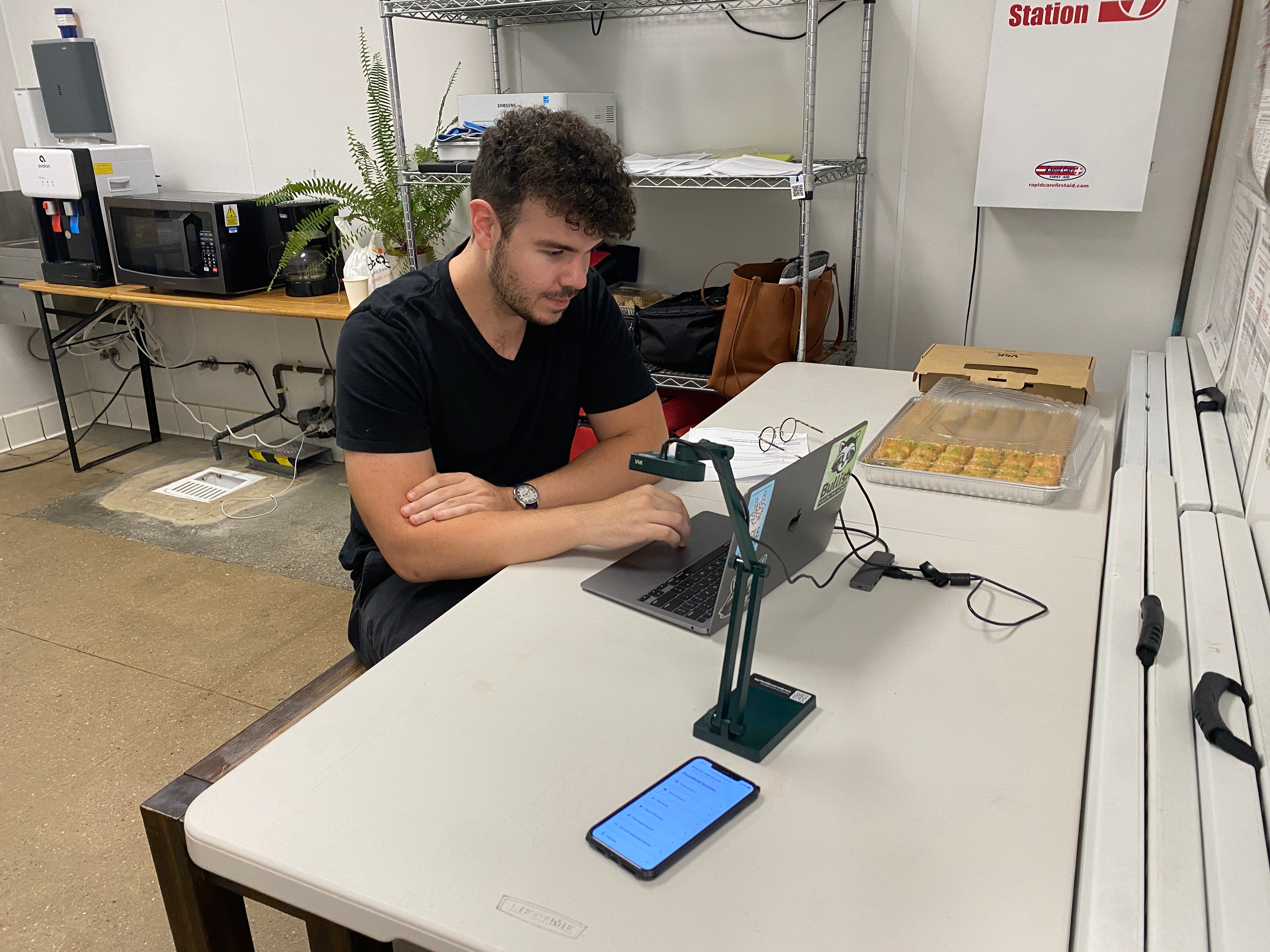
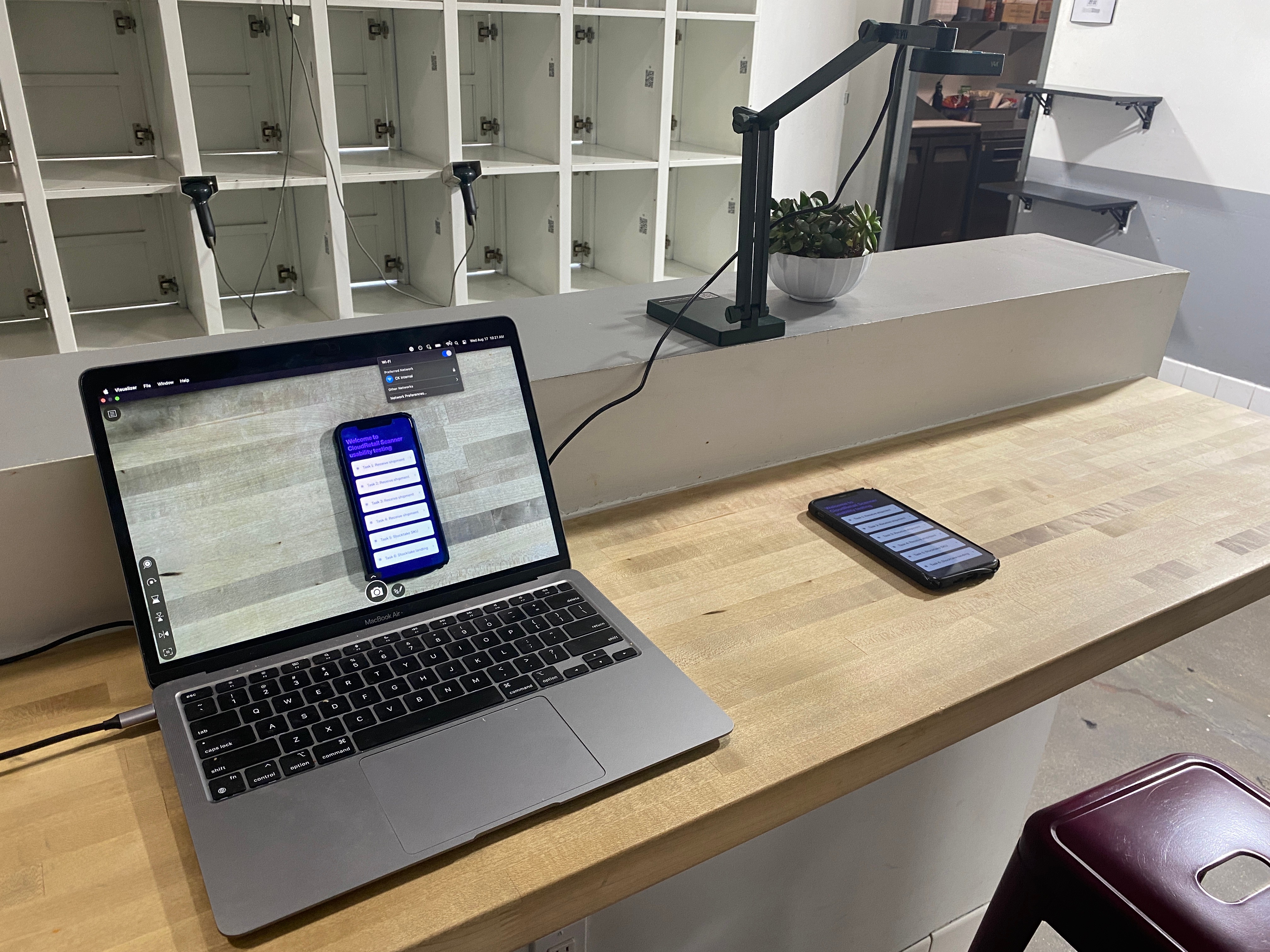
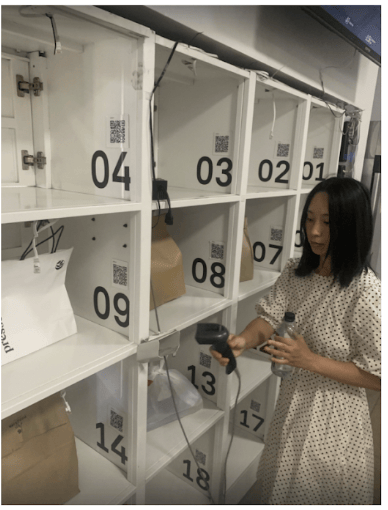
Mobile pop-up usability lab in facilities
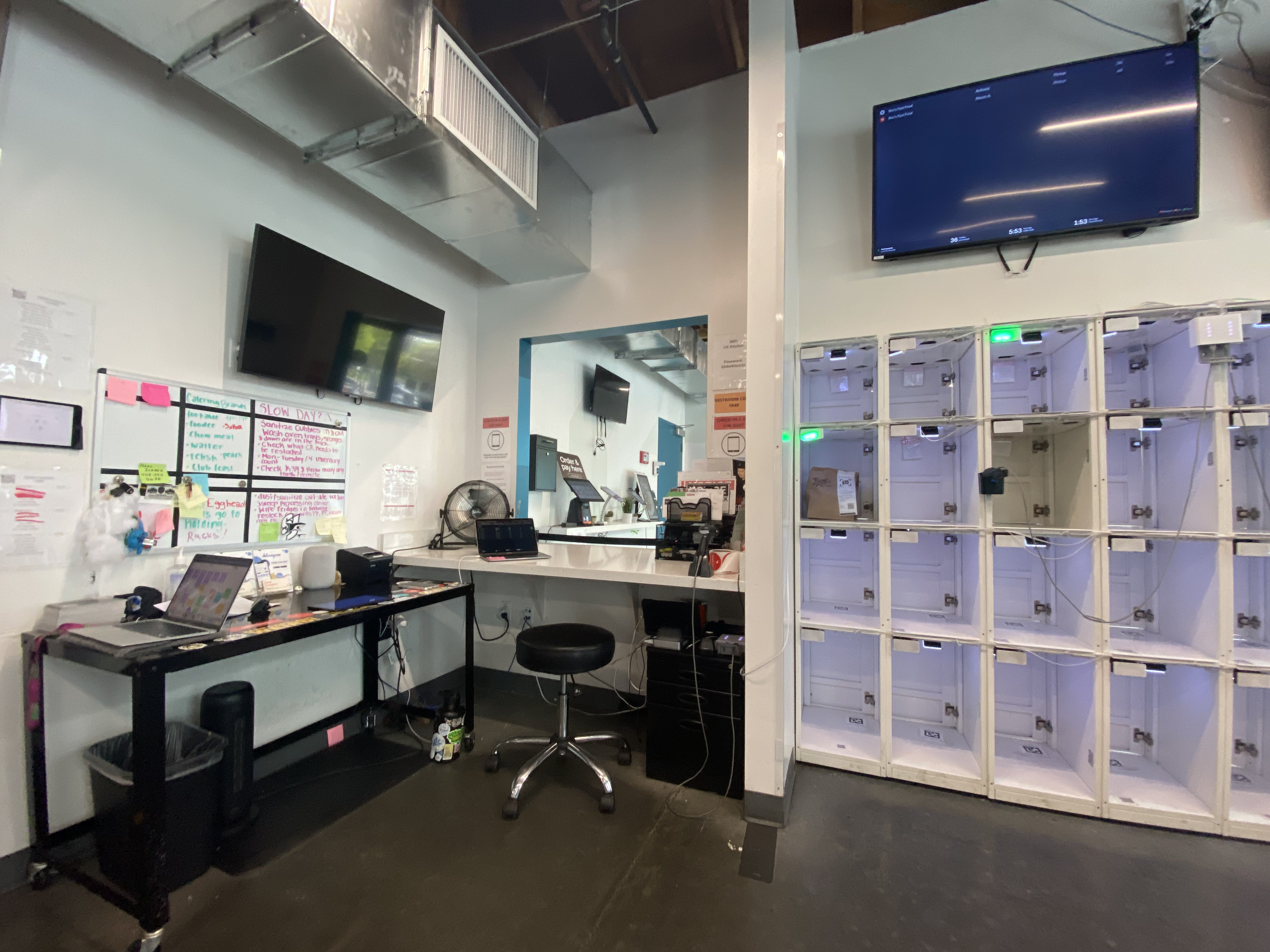
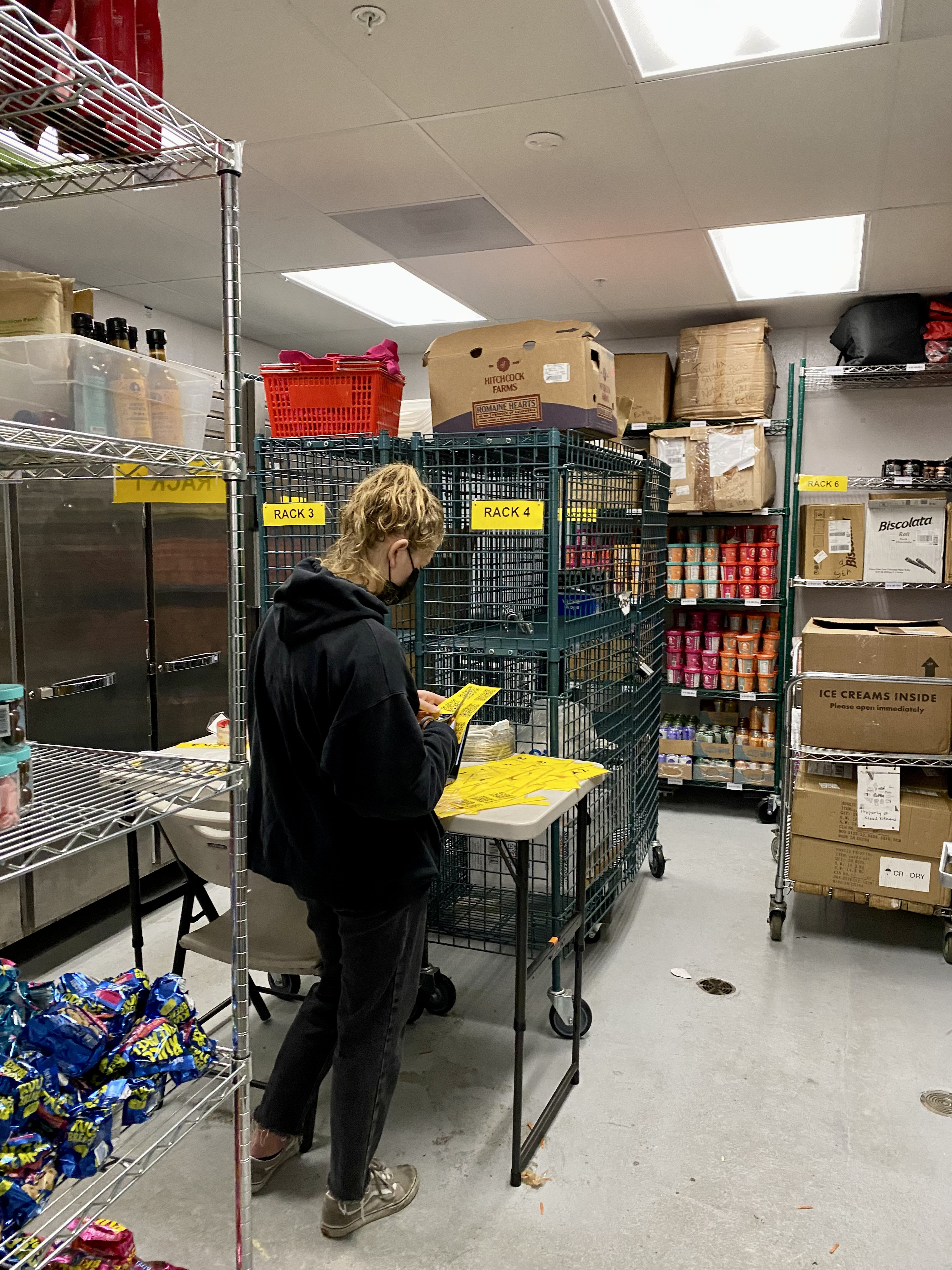
Observed and worked as food runners within facilities
Cross-team collaboration
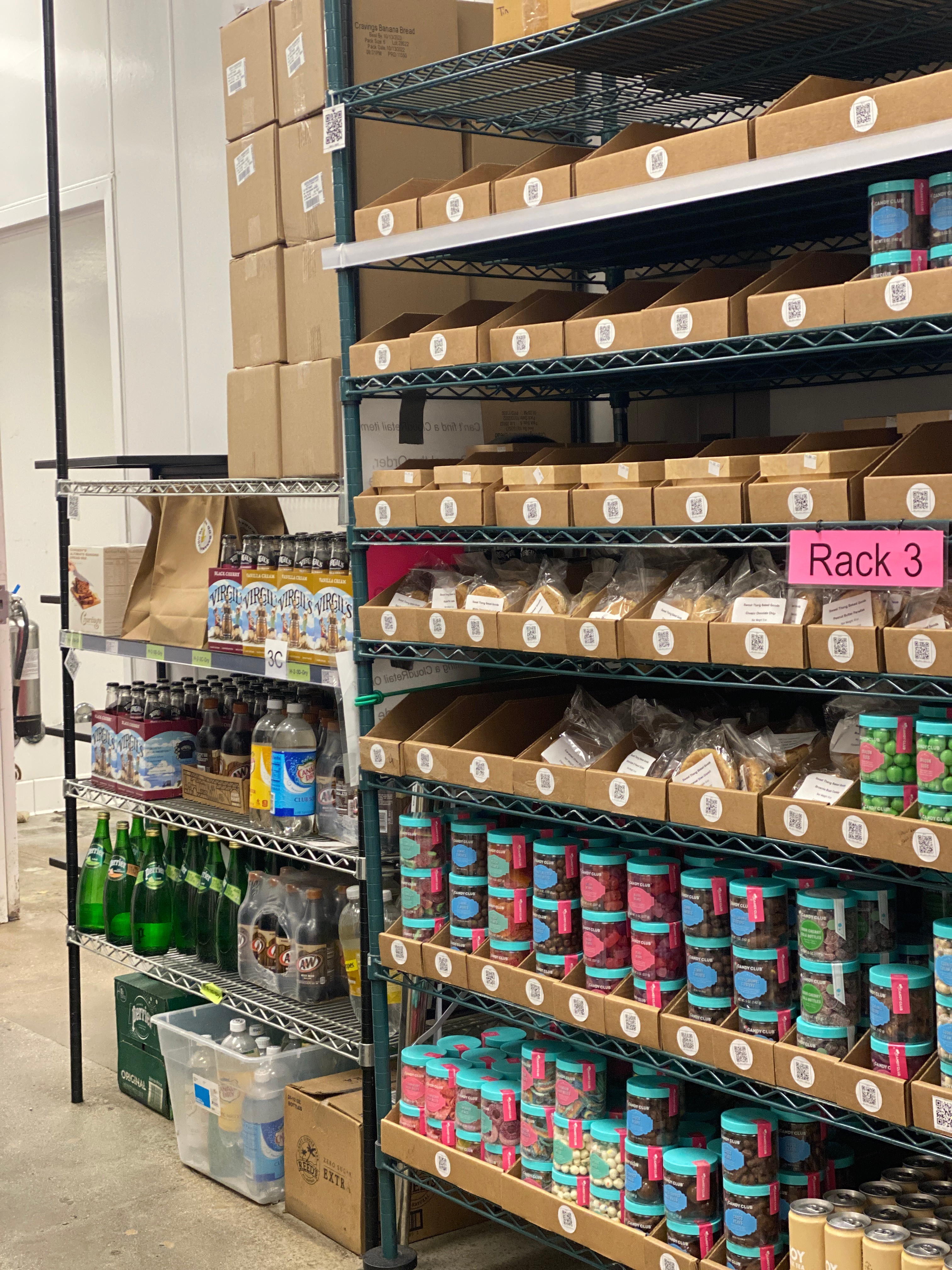
To address the gap , we partnered with the operations team to introduce a color-coded space tracking system with QR-coded racks.This created a direct mapping between the physical environment and the digital system:
- Each location became scannable and uniquely identifiable
- Users could anchor tasks to a specific location
- The system always had context of where actions were happening
This removed the need for manual mapping and significantly reduced ambiguity.
What we're building
To reduce operational errors, we focused on three high-impact operational moments:
- Receiving stock→ where inventory data was lost
- Order scan-out → where counts became inaccurate
- Stocktake → where tasks were too disruptive to complete
The solution
Make stocktake executable in the physical space
a. Aligning stocktake with physical space
Stocktake was rebuilt around the color-coded location system, making it fully location-based.Users count inventory by location, rather than navigating SKU lists.
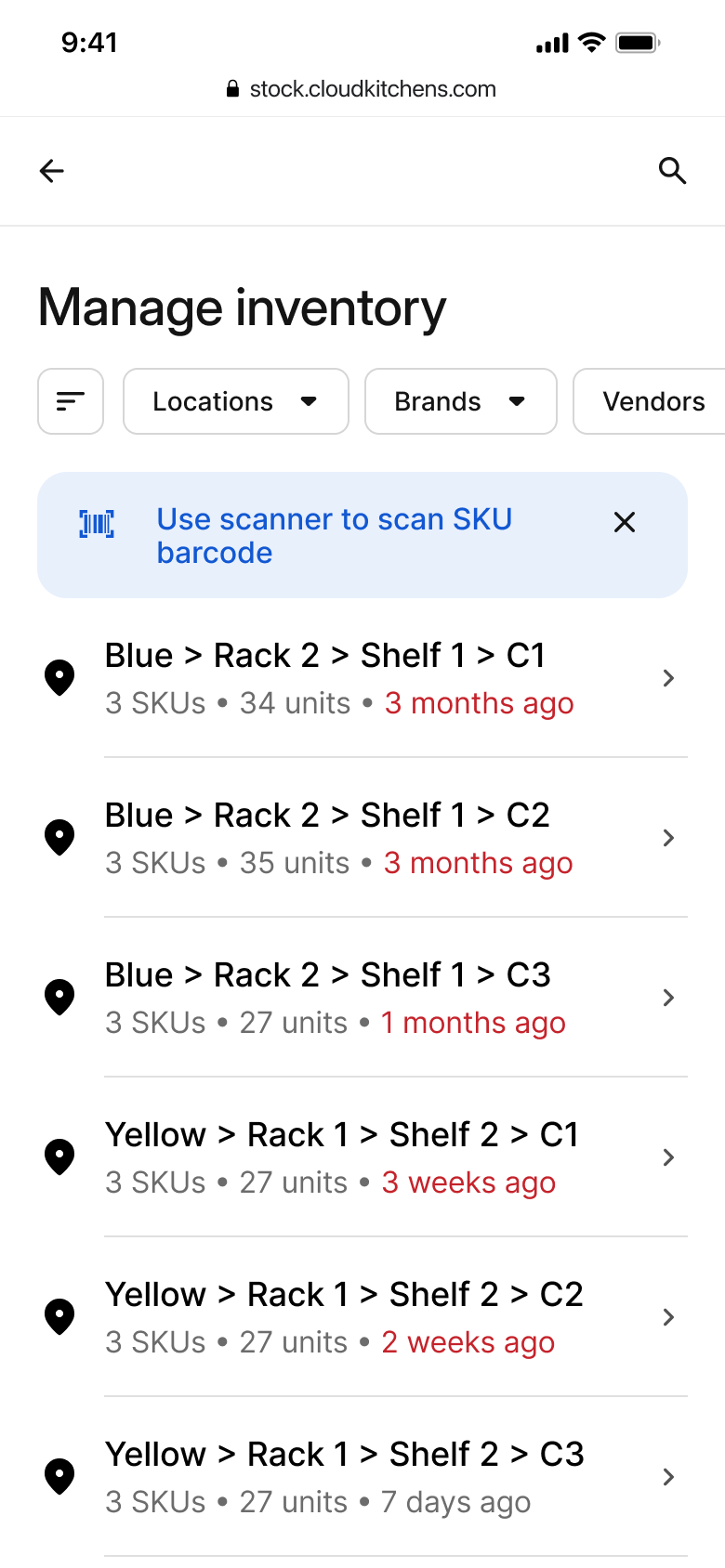
Manage inventory
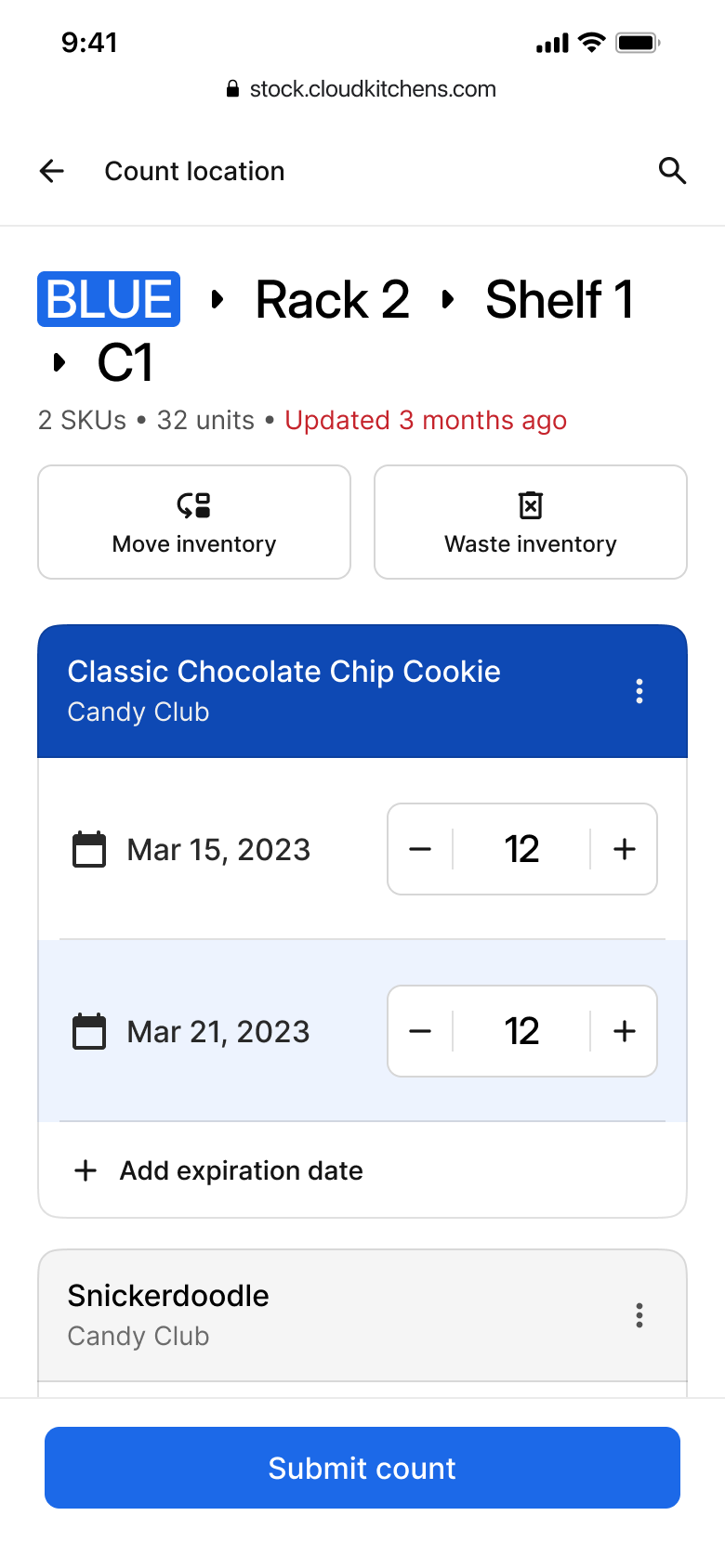
Count assigned location
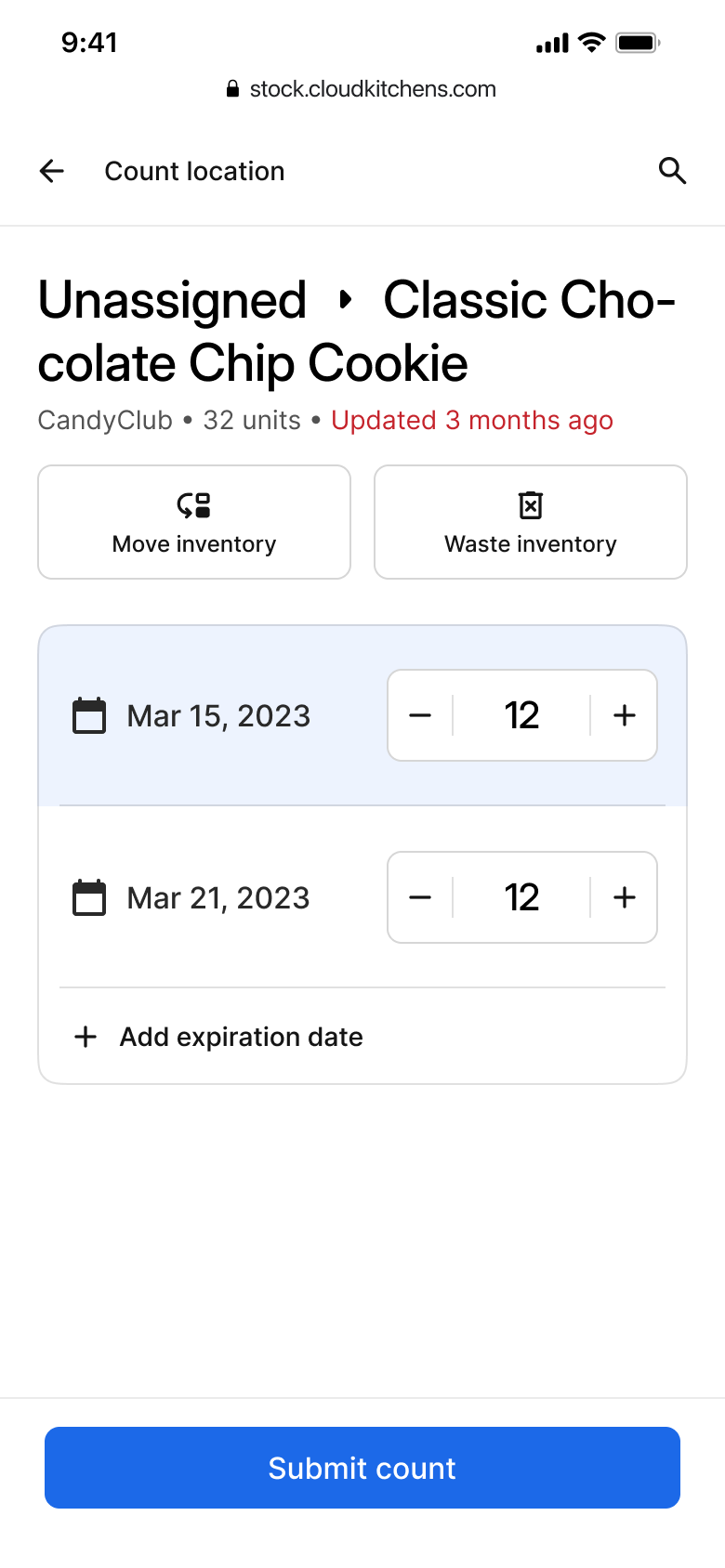
Count unassigned location
b. Embedding related actions into the flow
While counting, users can:
- Move inventory
- Mark items as waste
This eliminates the need for separate workflows and reduces redundant work.
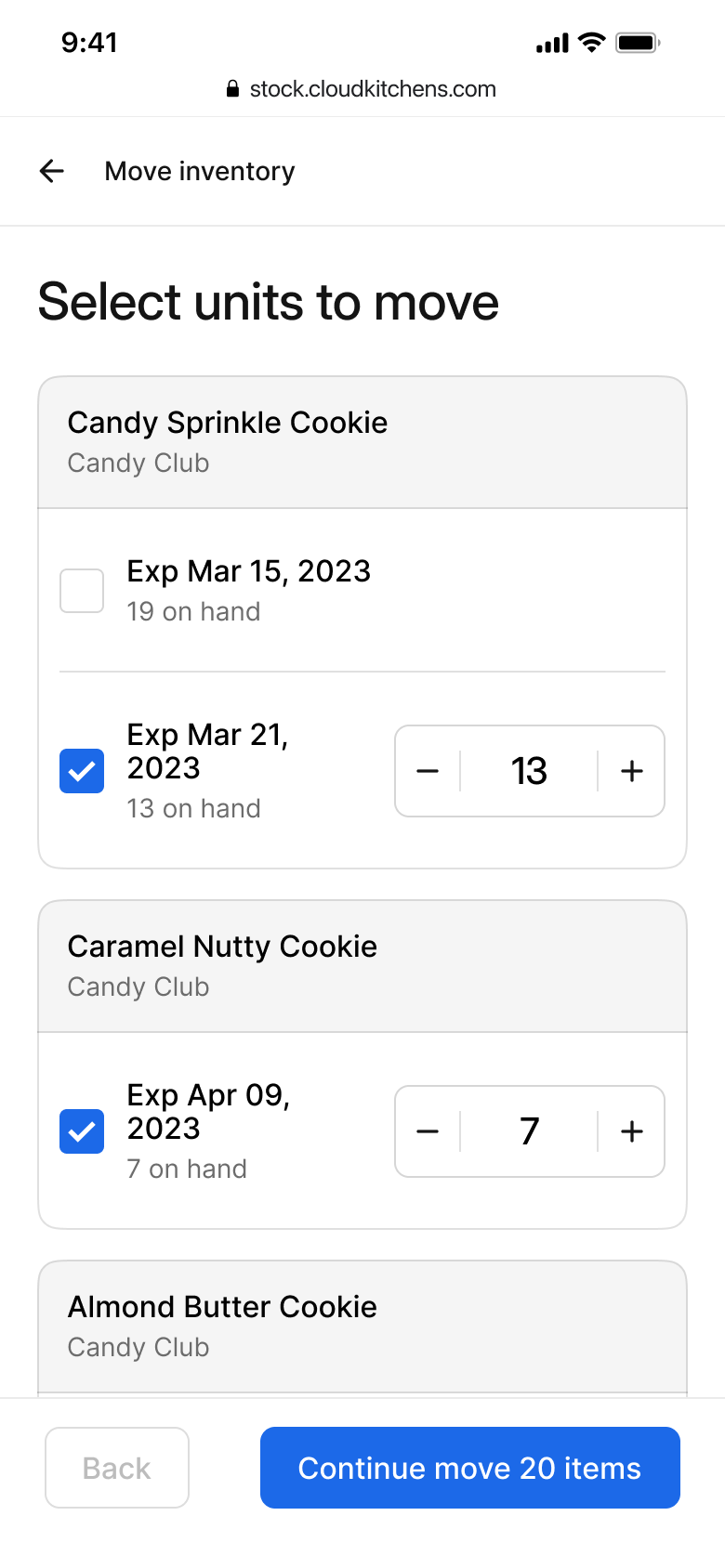
Move inventory
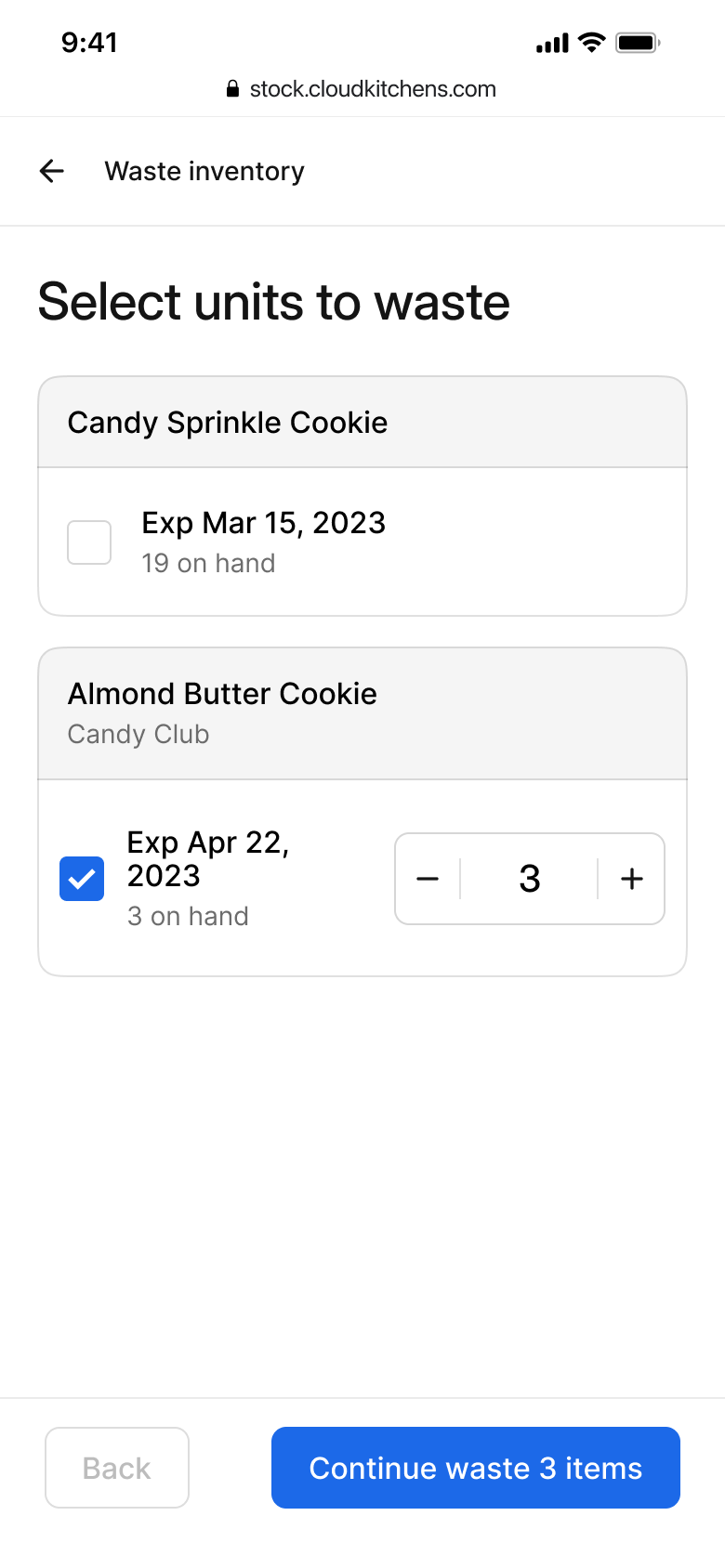
Waste inventory
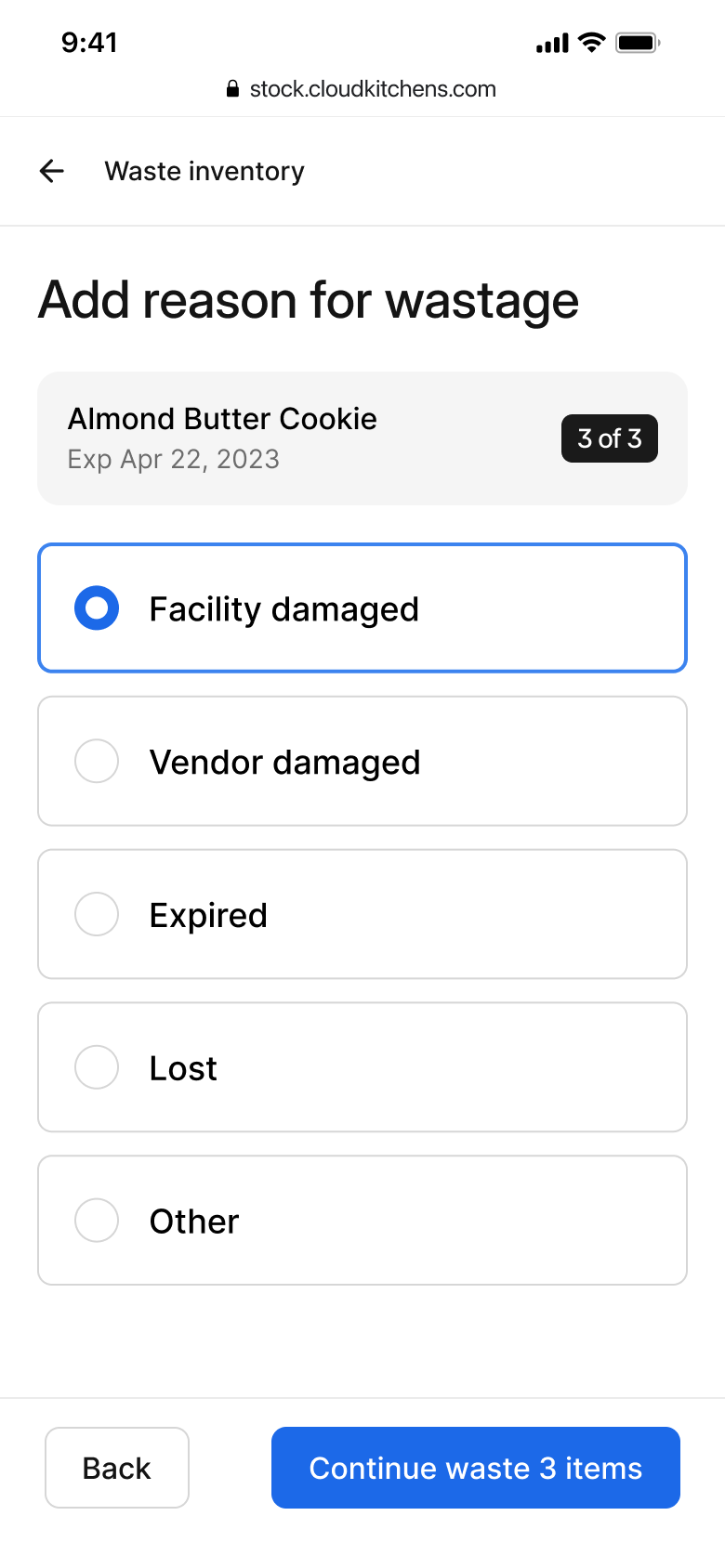
Choose reason to waste
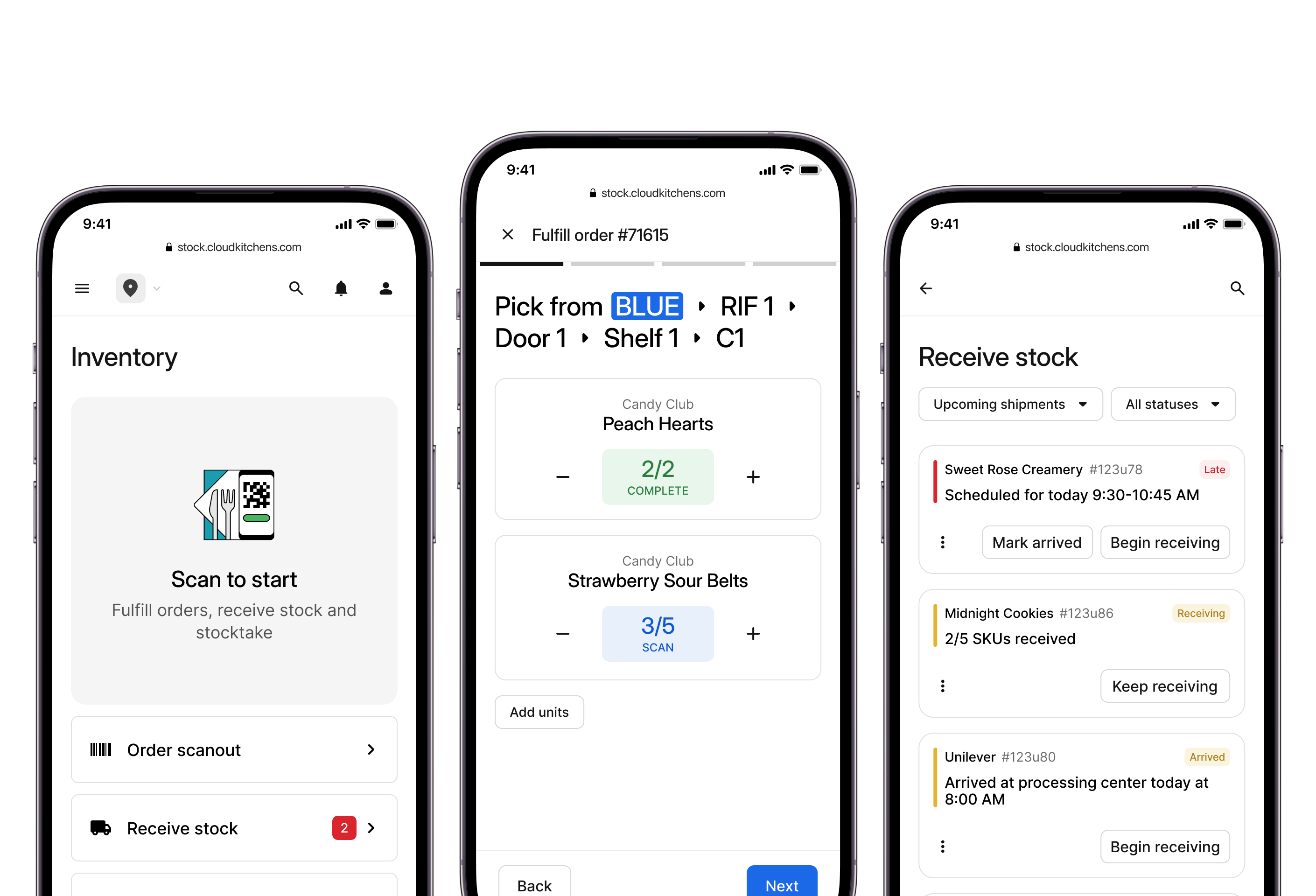
Guided, recoverable inventory receiving that reduce data entry errors
a. Supporting interrupted, real-world workflows
Receiving rarely happens in one continuous session. Staff are often interrupted or need to switch tasks midway.I introduced more granular statuses to reflect real progress:
- Items can be marked as arrived before being stocked
- Users can save progress and resume later
This allows users to work in fragments without losing context.
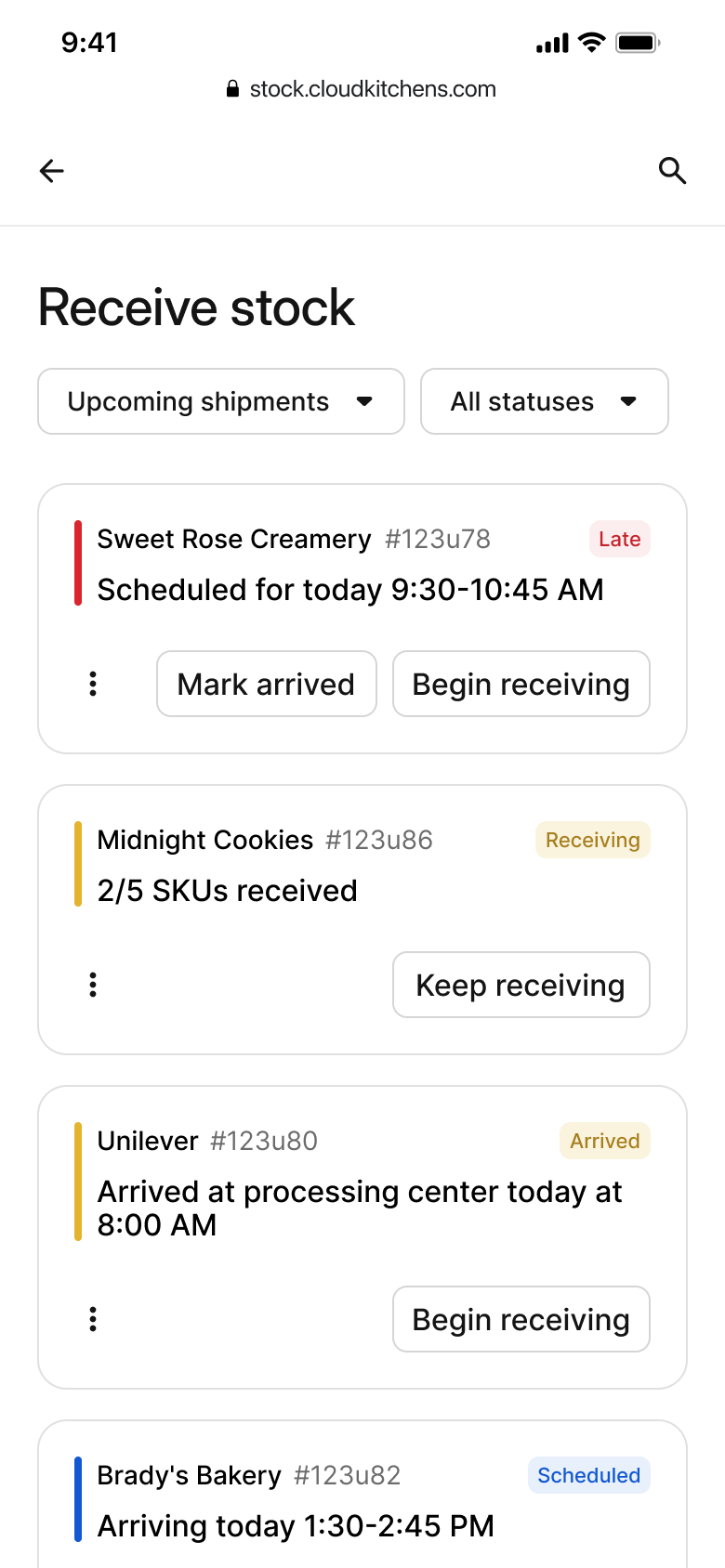
Incoming stocks
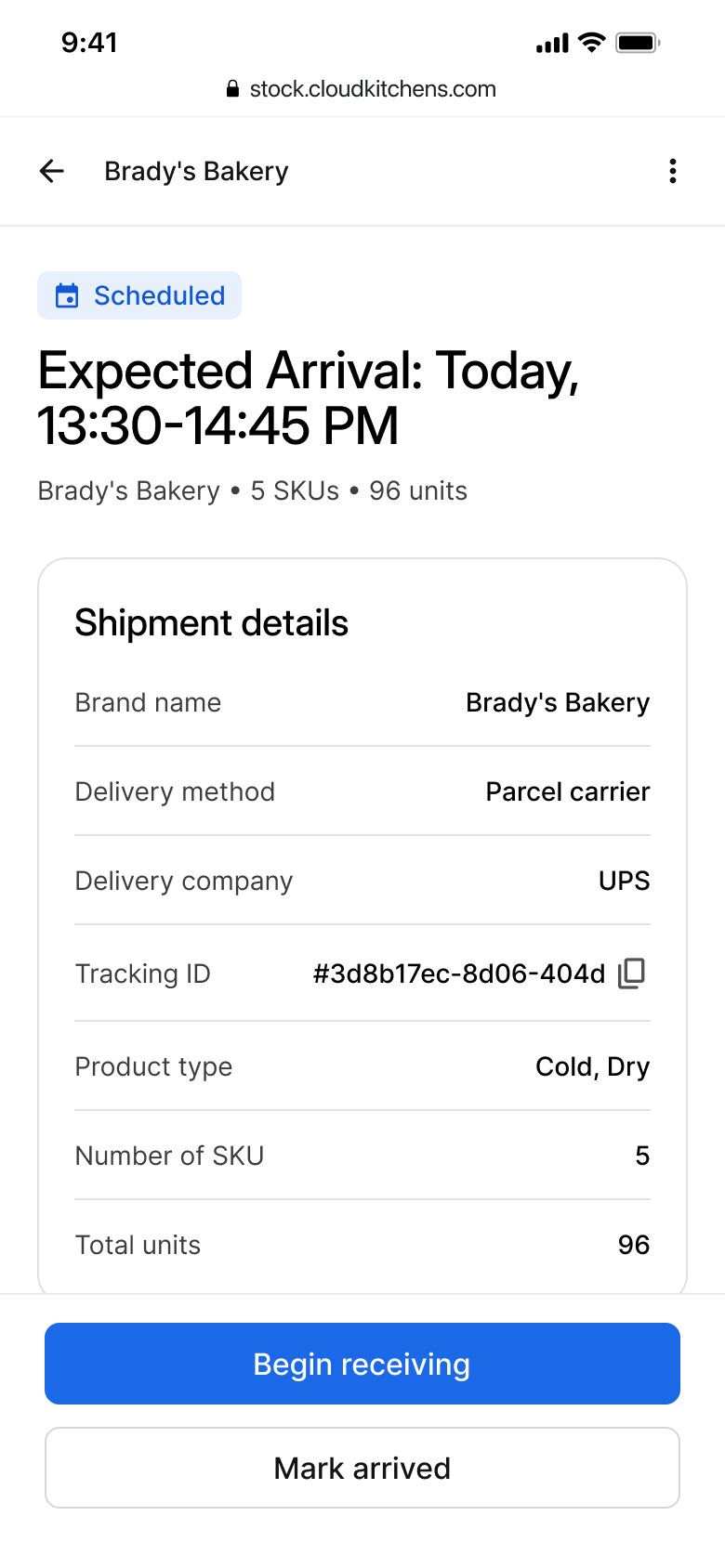
Scehduled shipment details
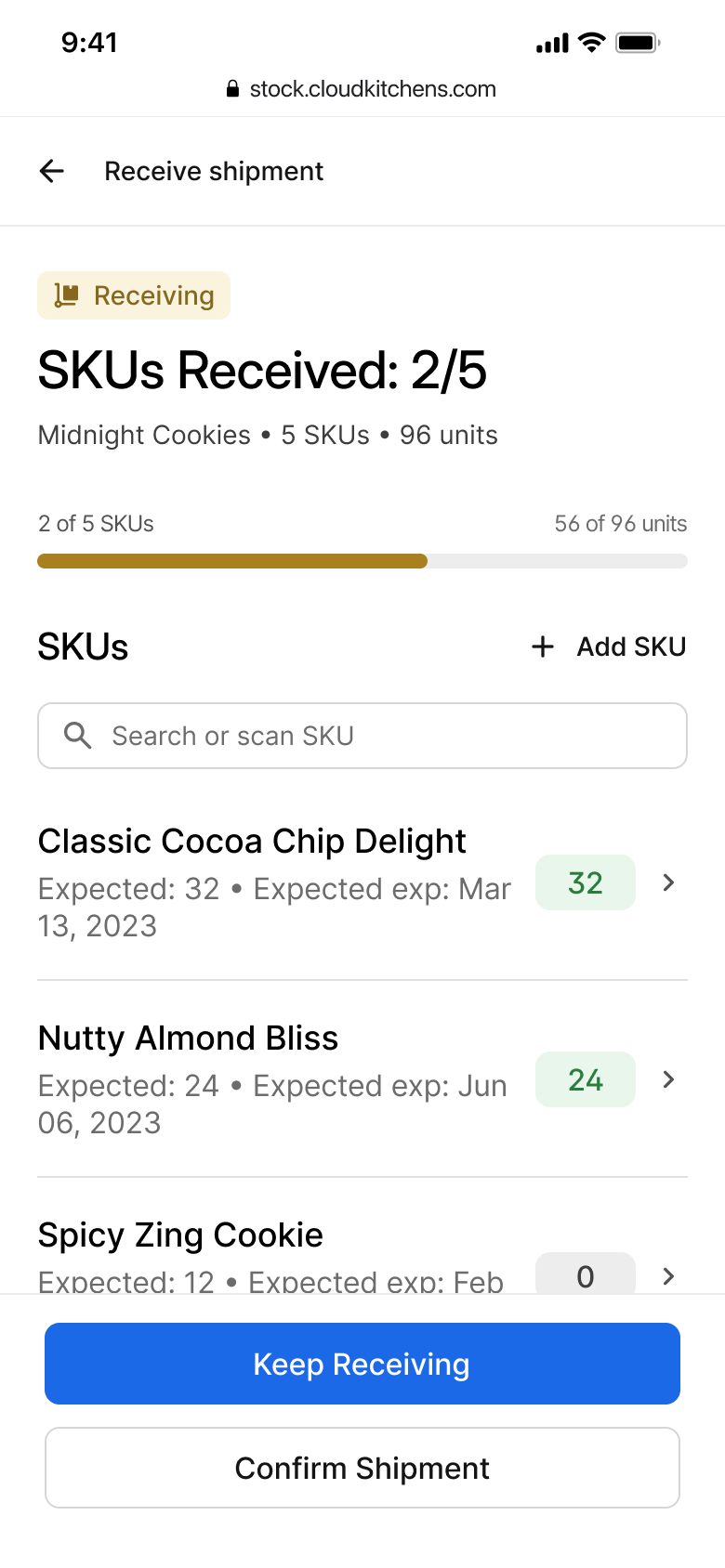
Receiving shipment details
b. Location-based, guided flow
Using the QR-coded rack system, I redesigned receiving as a location-based linear workflow.Users scan a location and are guided step by step, ensuring:
- Items are placed in the correct location
- Users follow a predefined sequence without needing to decide each step
This reduces reliance on memory and prevents common mistakes.
c. Capturing critical data at the source
I introduced expiration time input during receiving.By capturing this information at the moment items enter the system, we ensured more accurate tracking of inventory lifecycle.
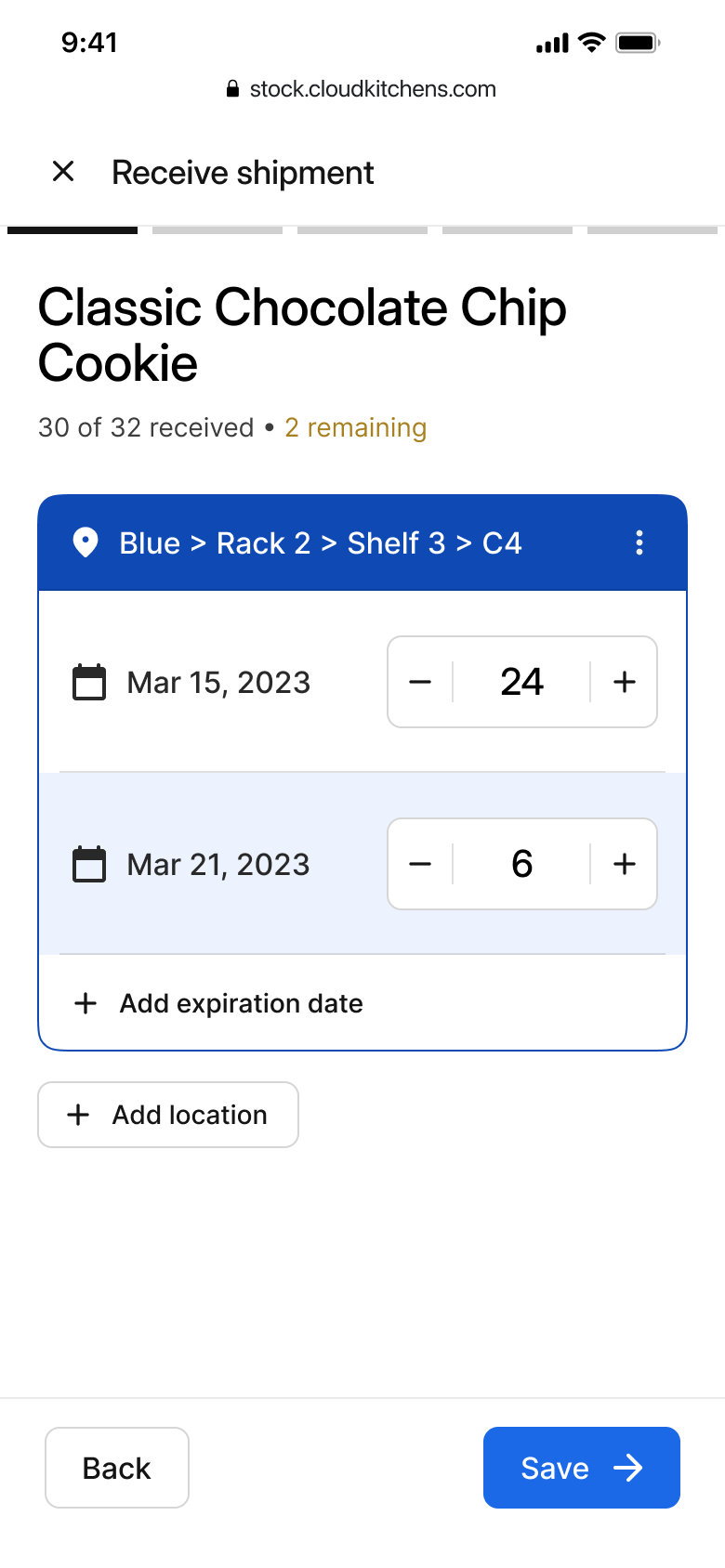
Receiving shipment
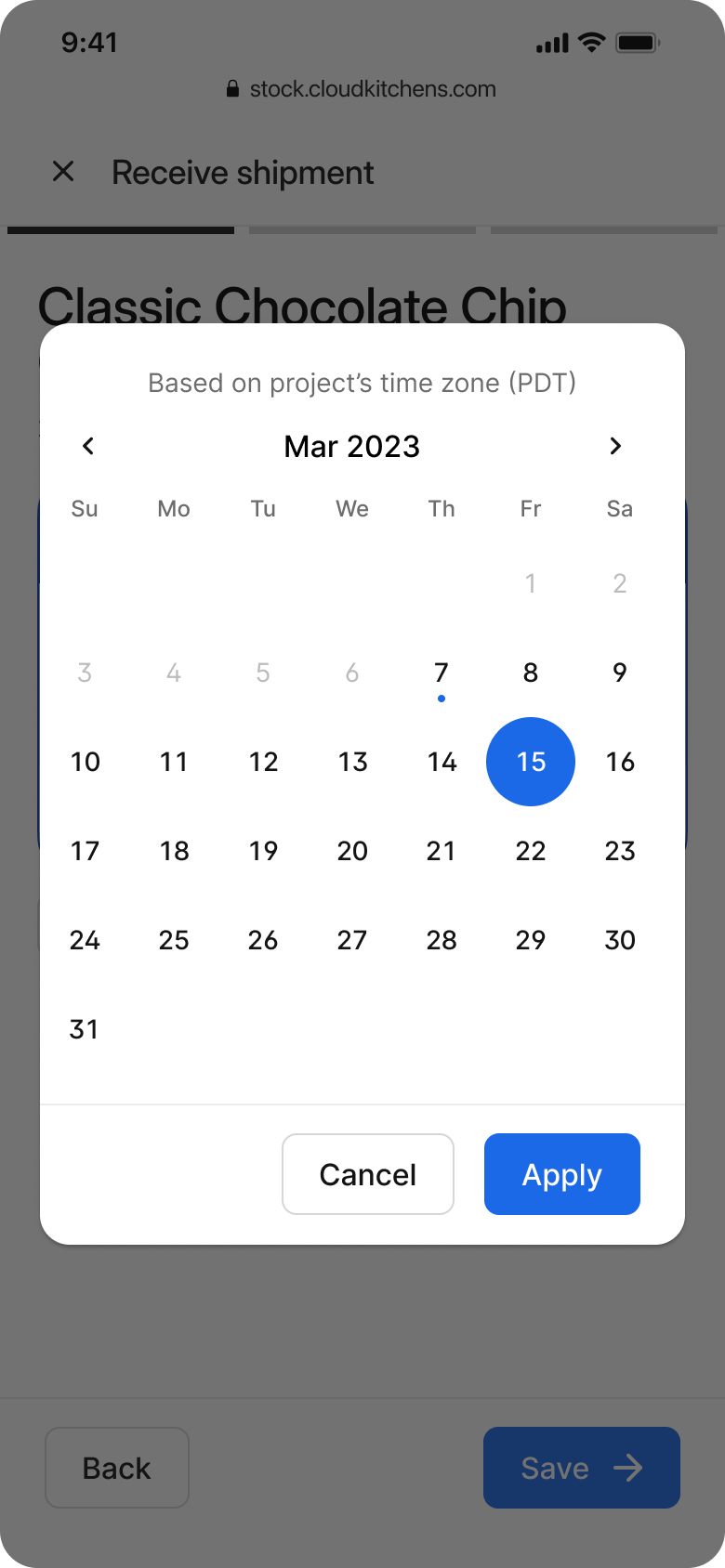
Correct expiration date
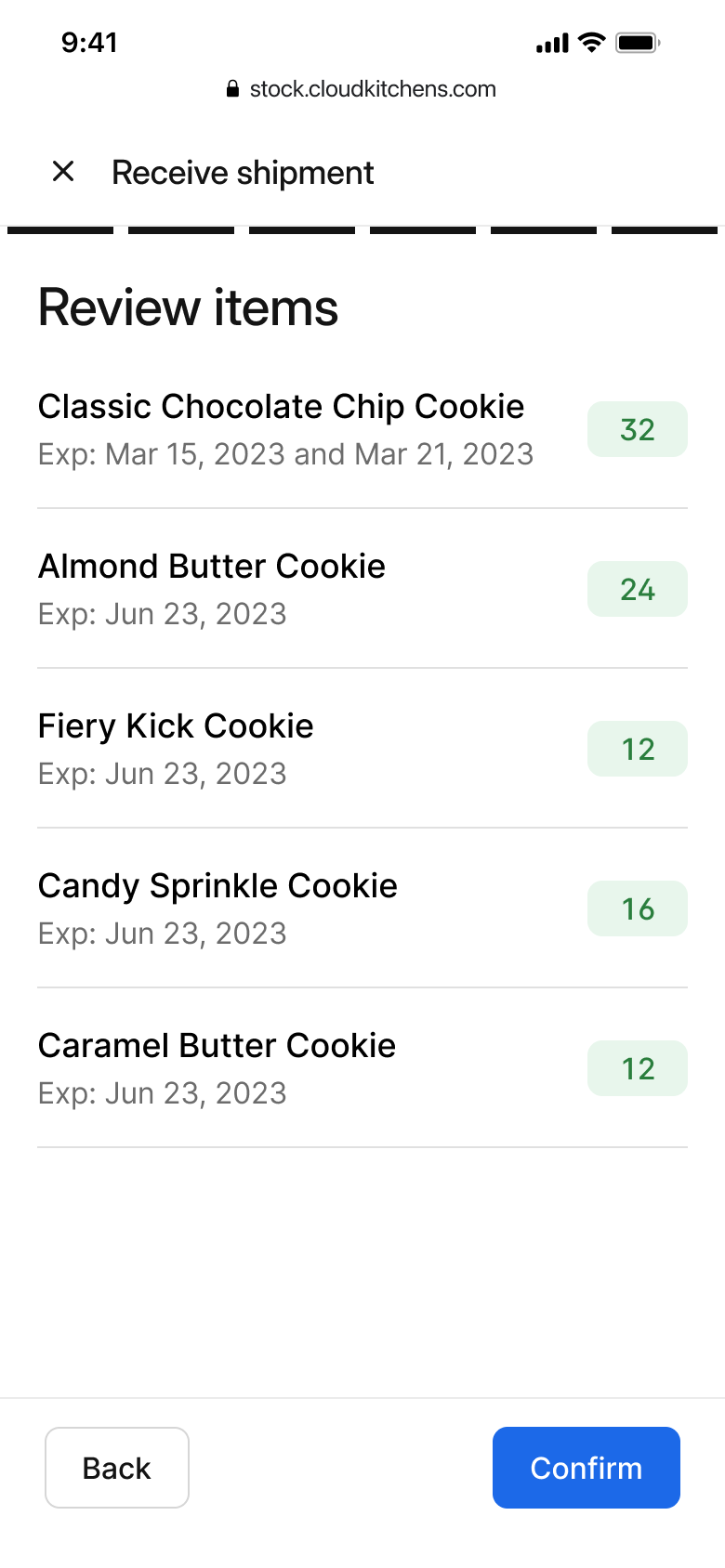
Review items
Real-Time accuracy in scan-first, guided picking
a. Enforcing correct picking behavior
I designed a guided, scan-first flow that enforces the correct picking sequence.Users follow a structured path, reducing the chance of picking the wrong item or quantity.
b. Handling edge cases and maintaining data integrity
When fulfillment doesn’t match the order (e.g., missing or substituted items), users are required to record the reason.The system then updates inventory in real time based on these inputs, ensuring data stays accurate even in imperfect scenarios.
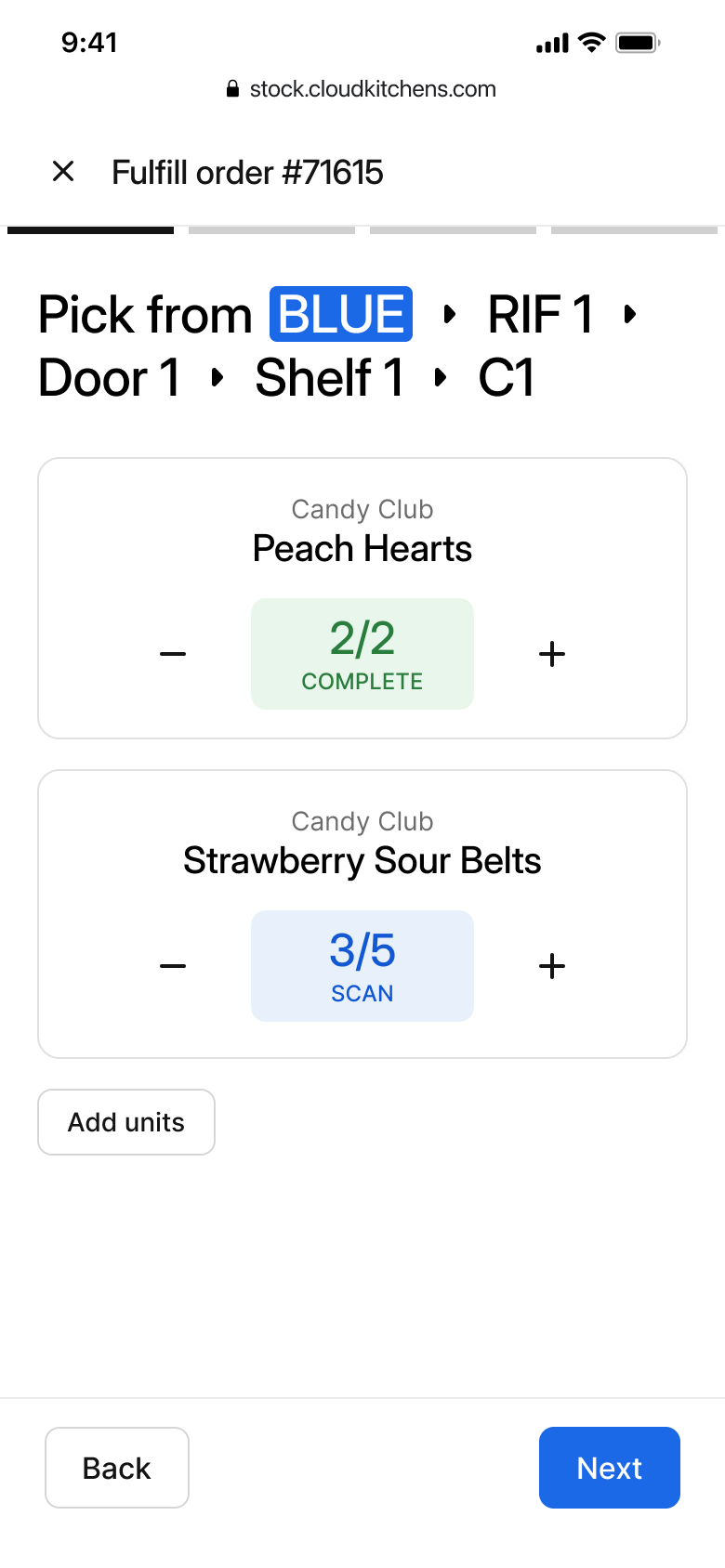
Scan-first order fulfillment
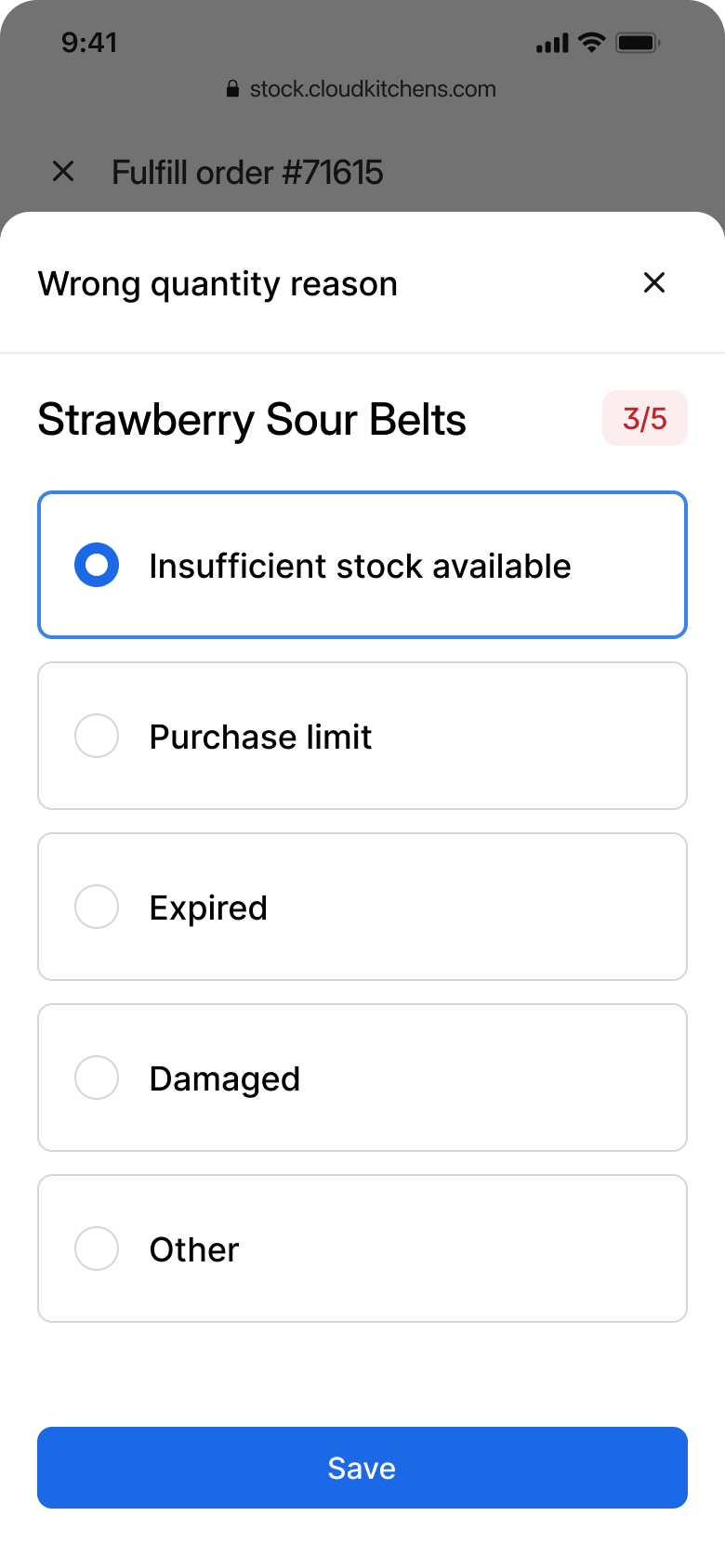
Correct quantity during fulfilling
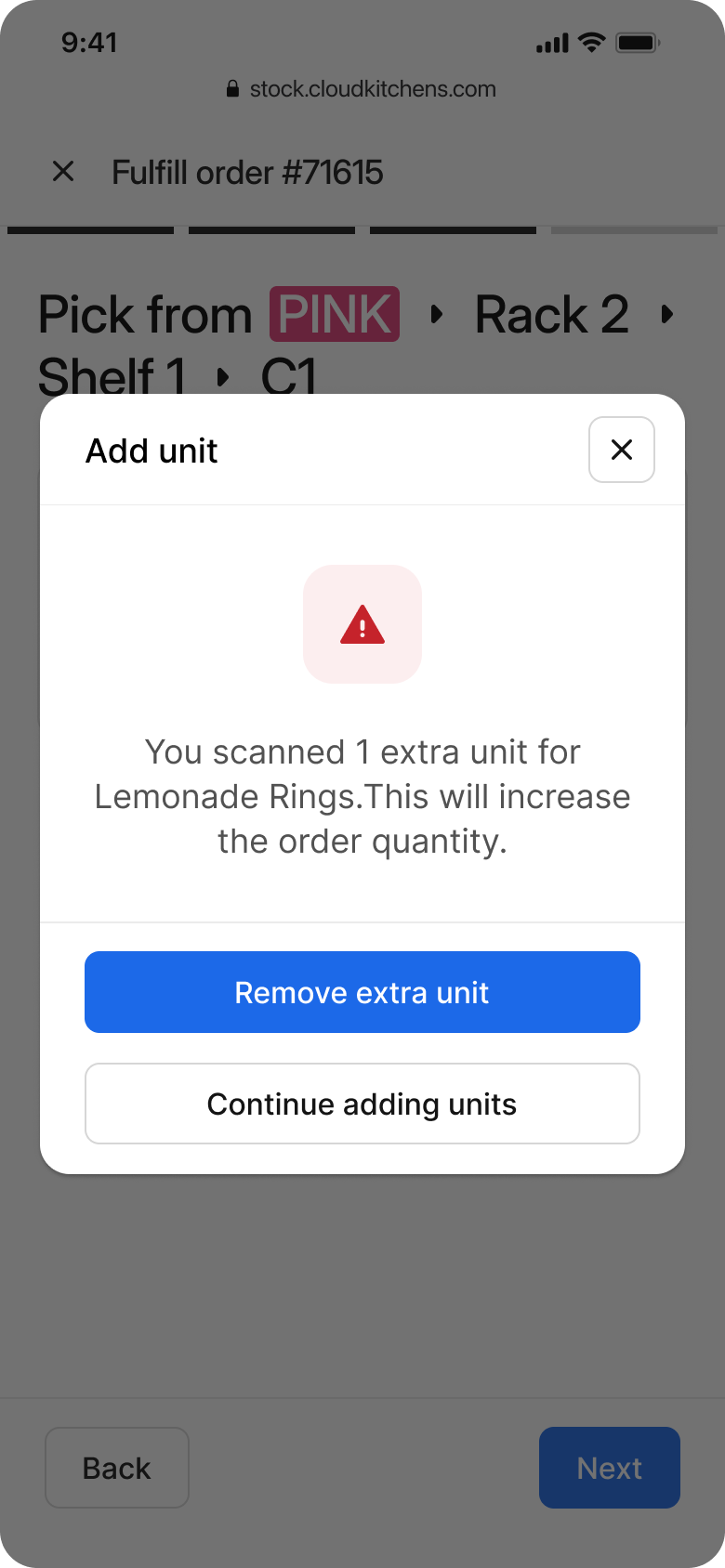
Add unit not in order
Turning inventory management into a system-driven daily workflow
a. From manual planning → system-driven task list
Previously, stocktake required users to manually plan and initiate tasks.I shifted this to a pushed task list model:
- The system generates tasks automatically
- Users simply follow their daily task list
- Progress is saved, allowing easy continuation after interruptions
This removes planning overhead and ensures consistency across the team.
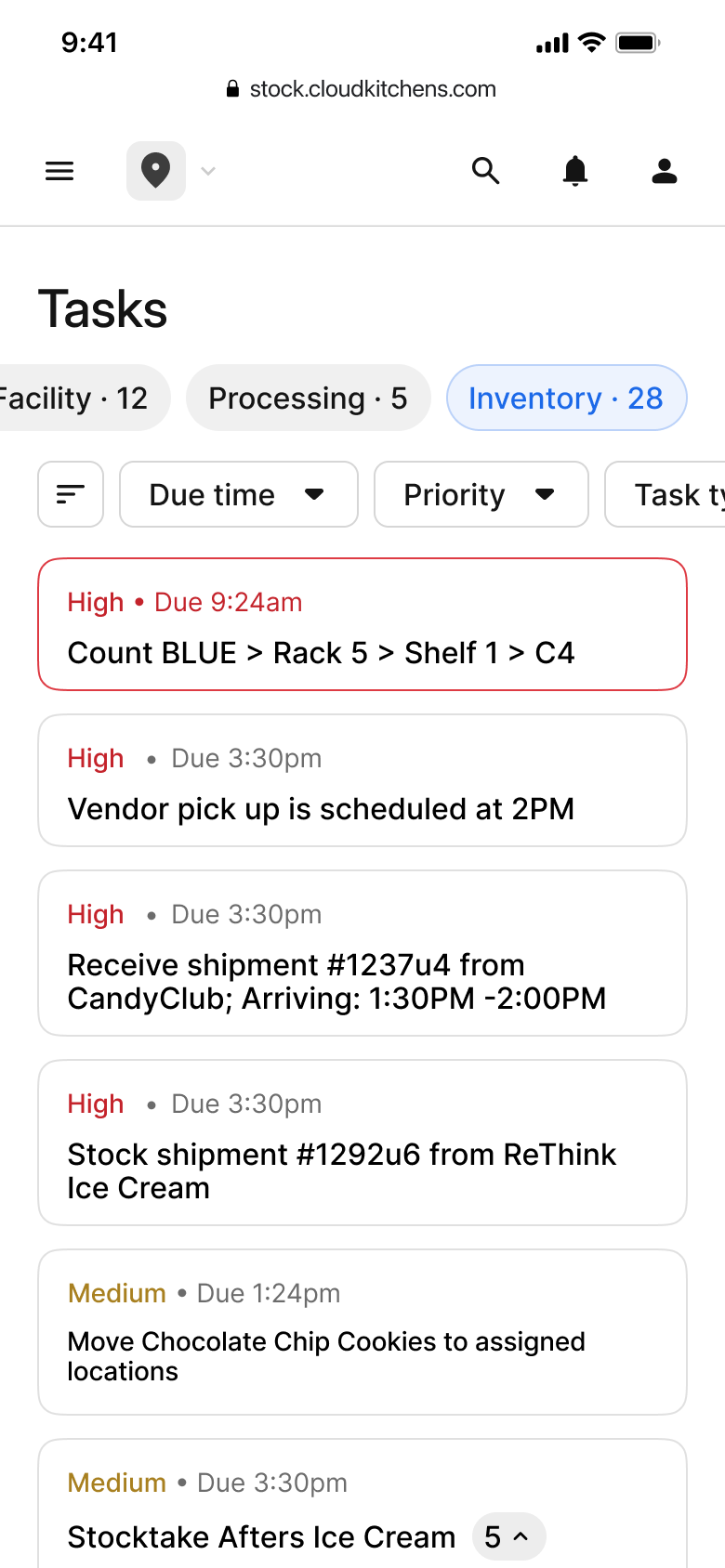
Task list
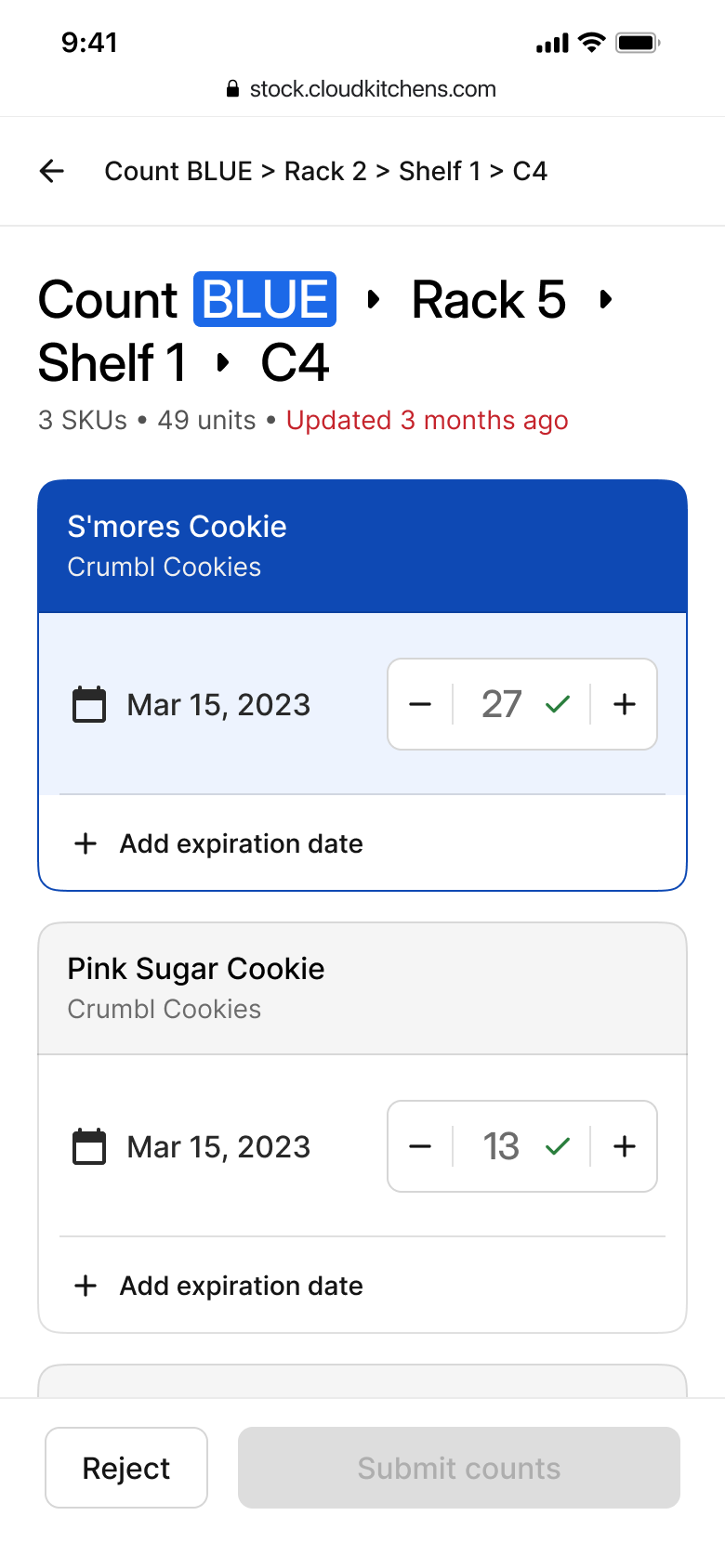
Count location task
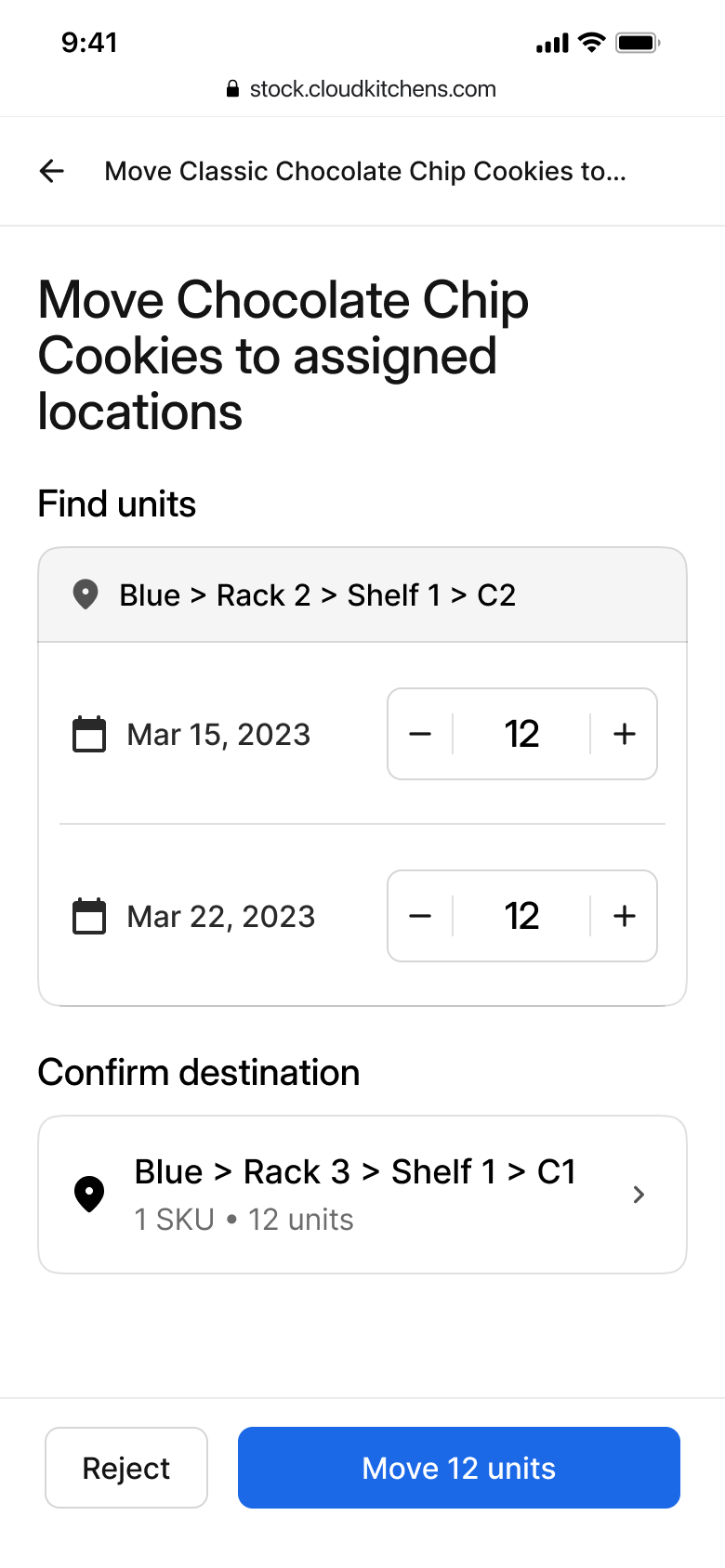
Move inventory task
Impact
Improved inventory accuracy from ~70% to 95%+, while reducing controllable ODR (Order defect rates ) by over 50%. Enabled consistent, location-driven workflows across facilities, reducing reliance on individual memory and minimizing picking errors.

Other Projects
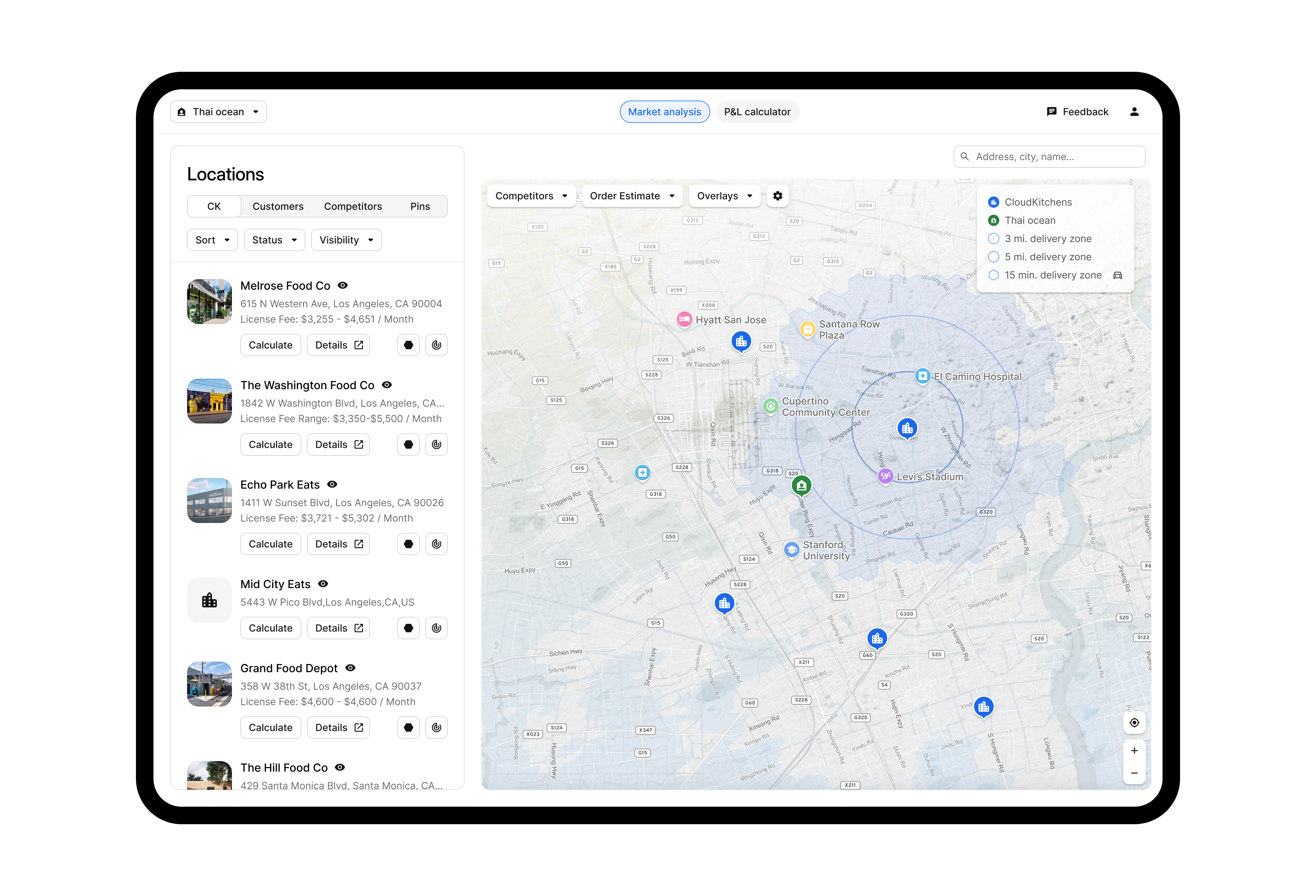
Improve Market Analysis Tool for AE Adoption
See Project
→
See Project
→
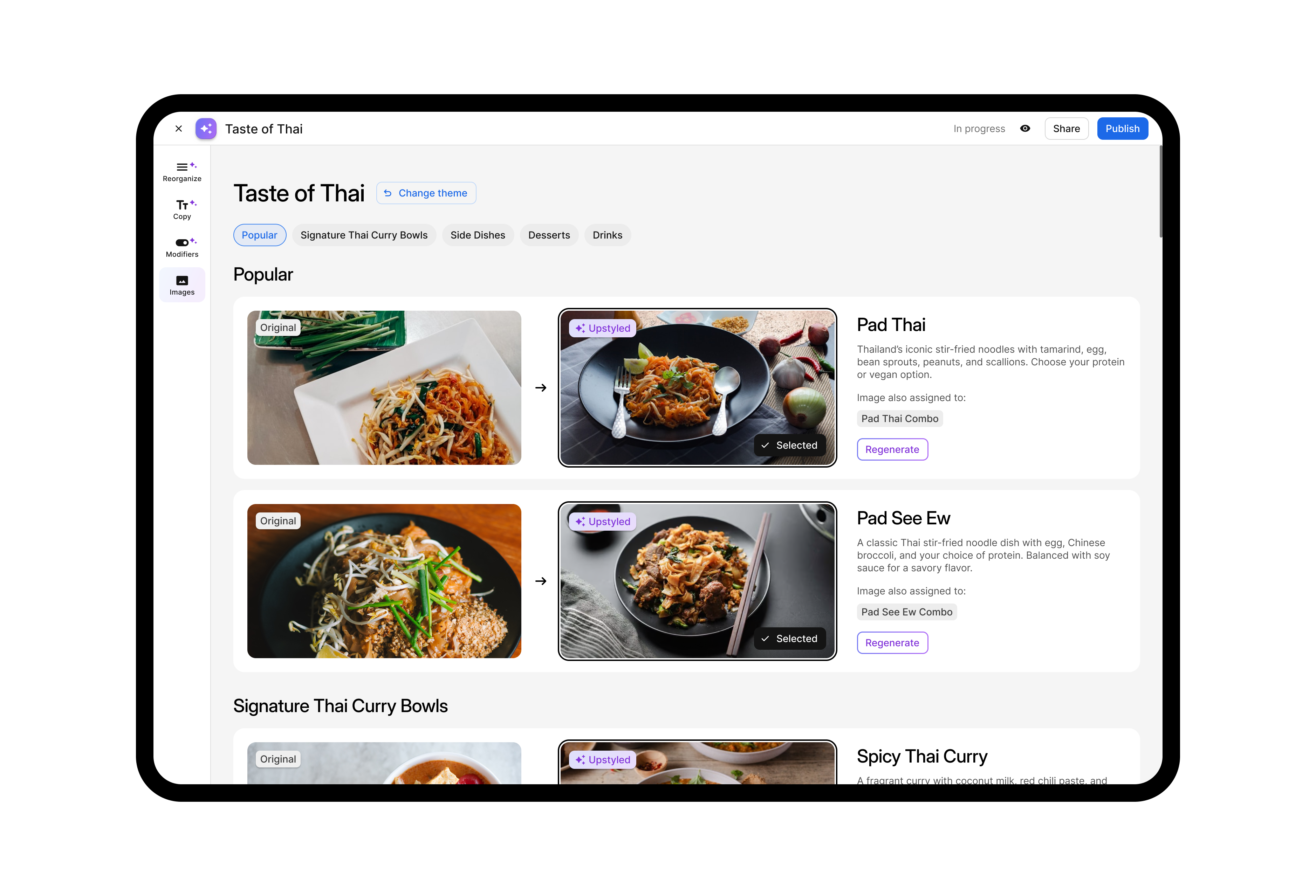
Create AI-Driven Menu Optimization Experience
See Project
→
See Project
→
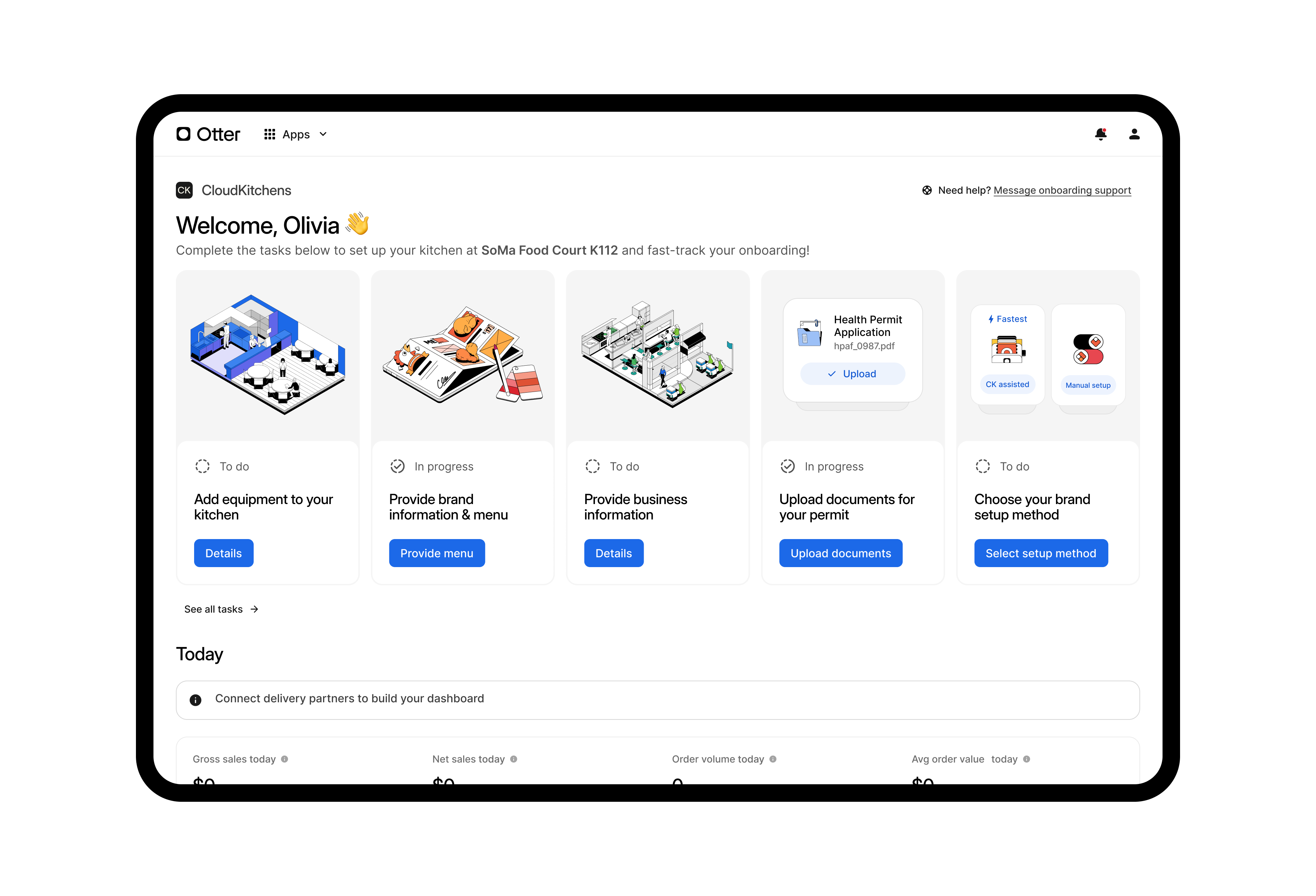
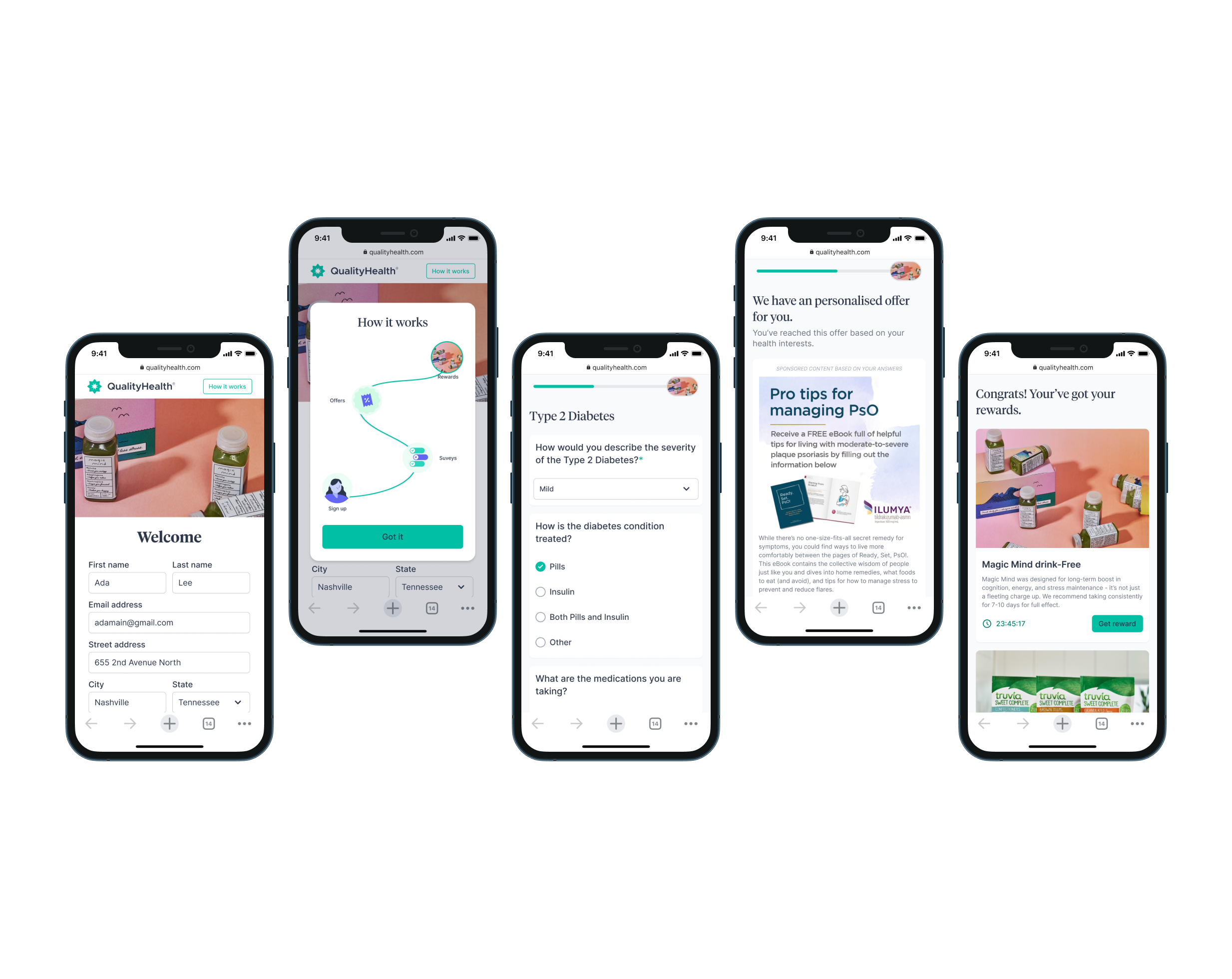
Redesign CloudKitchens Customer Onboarding Experience
See Project
→
See Project
→
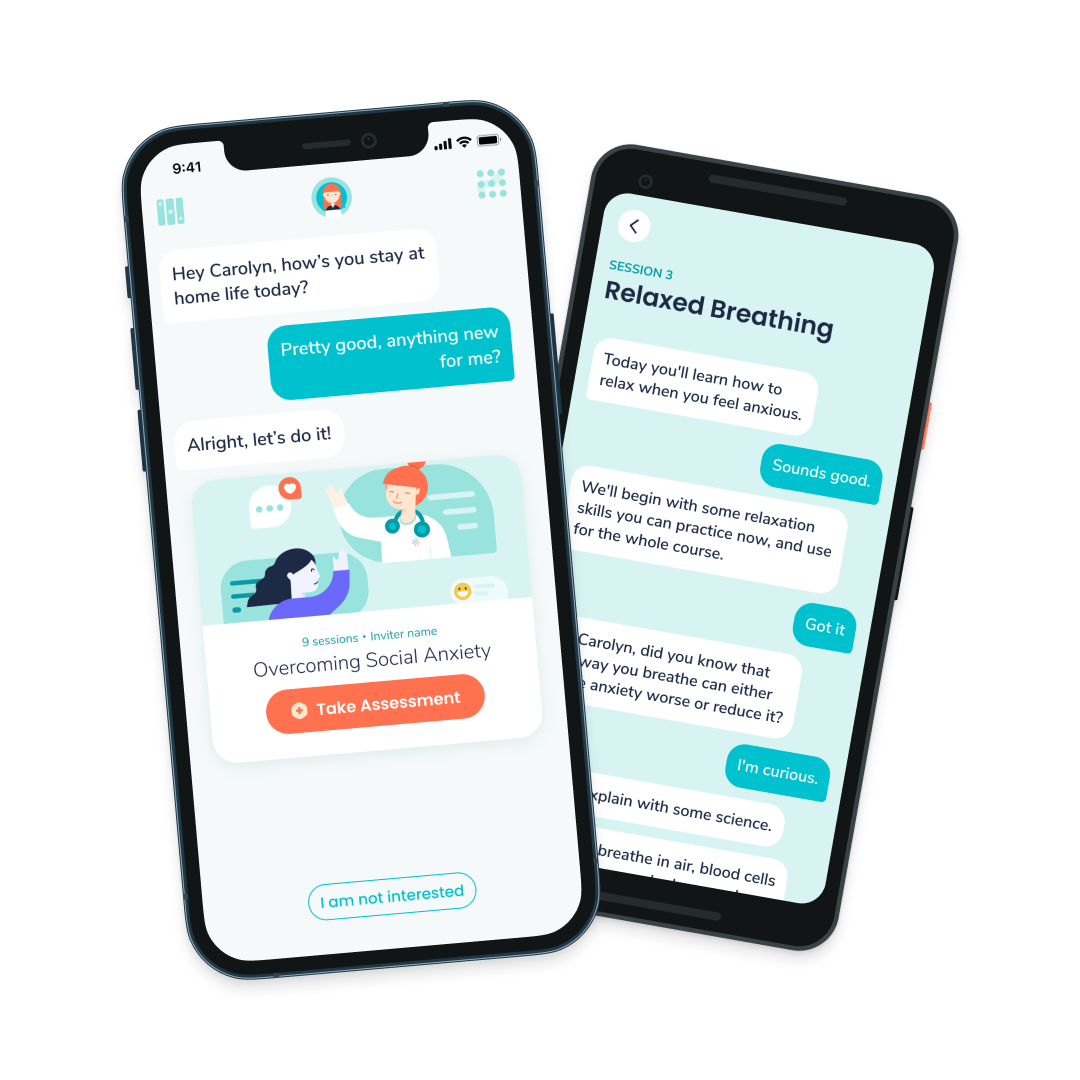
Serenity: From Mental Health Chatbot to Clinical Platform
See Project
→
See Project
→
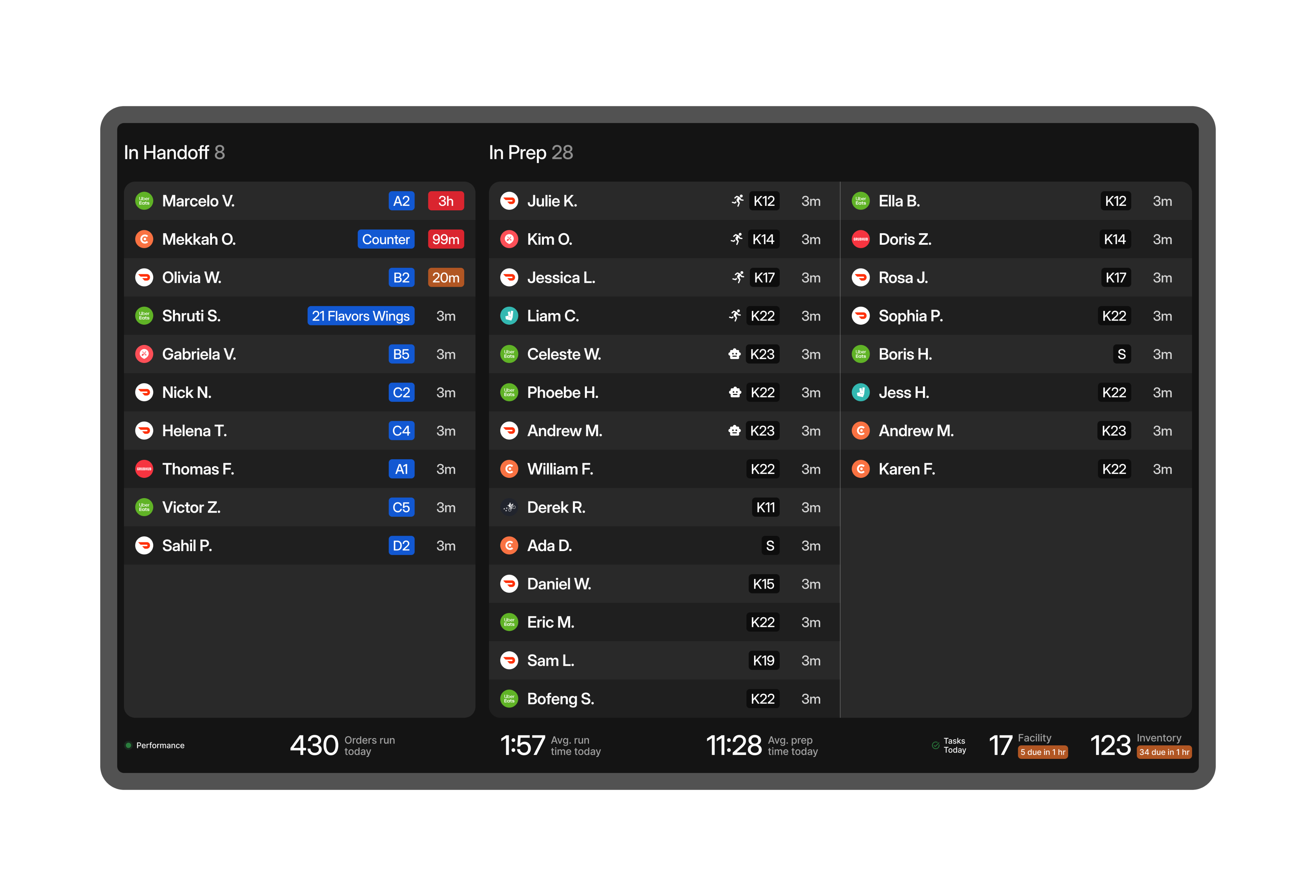
Modular TV Feed Redesign for Facility Operations
See Project
→
See Project
→
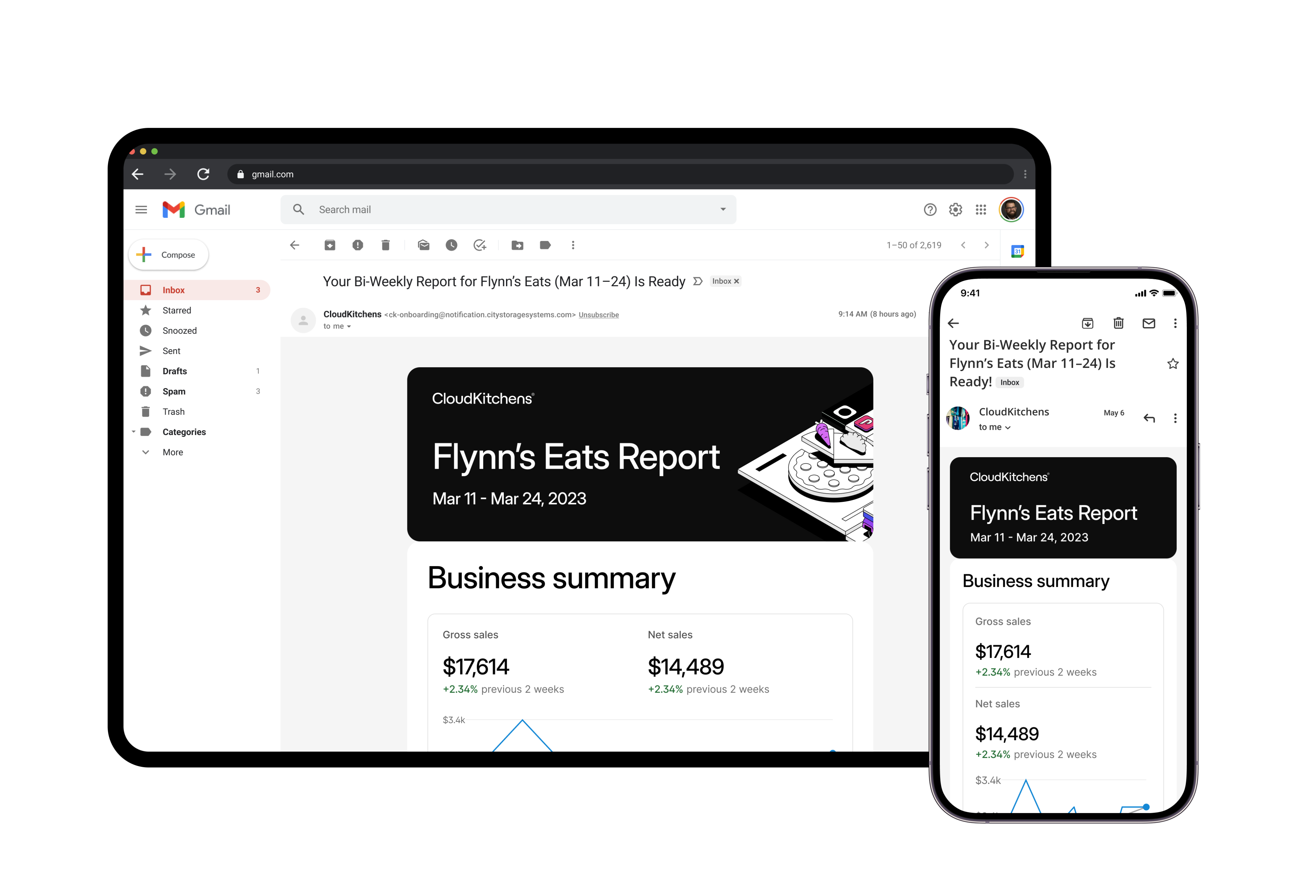
Automating Business Reports with AI-Generated Insights
See Project
→
See Project
→
More Projects
See Project
→
See Project
→



Work
Work
About
About
Improving inventory accuracy with a scan-first, location-based workflow
This project focuses on improving inventory operations in a fast-paced warehouse environment, where staff work across multiple tasks and frequent interruptions.
The existing system didn’t reflect how work actually happens, creating unnecessary opportunities for errors. The goal was to redesign the workflow to better align with real-world operations and improve inventory accuracy.
Lead Product Designer
Mobile Web App
2022
The problem
High order defect rates were impacting customers and business performance.
We were seeing consistently high defect rates, with controllable ODR staying above 4%, leading to poor customer experience, increased refunds, and operational inefficiencies.
Through our analysis, we identified a strong correlation between ODR and low inventory accuracy, which was hovering around 70%, making it a key driver of defects and a primary lever for improvement.
Understanding the real workflow
To better understand this gap, we studied active facilities through shadowing, live usability sessions, and hands-on observation so the redesign reflected interruptions, movement, and physical constraints.
The research showed that the errors were systemic, not individual. Across sites, the same themes repeated: people worked by location, the system forced manual translation, and interruptions made it easy for context to disappear, but the system did not support how work actually happened on the floor.
- Loose workflows: Users had too much freedom in critical tasks, which made it easy to skip steps or improvise around guardrails.
- No physical mapping: Staff had to translate between the warehouse and the interface manually because digital tasks were not anchored to real locations.
- Interrupted work: Flows assumed uninterrupted, linear work even though tasks were fragmented and staff regularly switched context midstream.
Mobile pop-up usability lab in facilities
Observed and worked as food runners within facilities
Cross-team collaboration
To address the gap , we partnered with the operations team to introduce a color-coded space tracking system with QR-coded racks.This created a direct mapping between the physical environment and the digital system:
- Each location became scannable and uniquely identifiable
- Users could anchor tasks to a specific location
- The system always had context of where actions were happening
This removed the need for manual mapping and significantly reduced ambiguity.
What we're building
To reduce operational errors, we focused on three high-impact operational moments:
- Receiving stock→ where inventory data was lost
- Order scan-out → where counts became inaccurate
- Stocktake → where tasks were too disruptive to complete
The solution
Make stocktake executable in the physical space
a. Aligning stocktake with physical space
Stocktake was rebuilt around the color-coded location system, making it fully location-based.Users count inventory by location, rather than navigating SKU lists.
Manage inventory
Count assigned location
Count unassigned location
b. Embedding related actions into the flow
While counting, users can:
- Move inventory
- Mark items as waste
This eliminates the need for separate workflows and reduces redundant work.
Move inventory
Waste inventory
Choose reason to waste
Guided, recoverable inventory receiving that reduce data entry errors
a. Supporting interrupted, real-world workflows
Receiving rarely happens in one continuous session. Staff are often interrupted or need to switch tasks midway.I introduced more granular statuses to reflect real progress:
- Items can be marked as arrived before being stocked
- Users can save progress and resume later
This allows users to work in fragments without losing context.
Incoming stocks
Scehduled shipment details
Receiving shipment details
b. Location-based, guided flow
Using the QR-coded rack system, I redesigned receiving as a location-based linear workflow.Users scan a location and are guided step by step, ensuring:
- Items are placed in the correct location
- Users follow a predefined sequence without needing to decide each step
This reduces reliance on memory and prevents common mistakes.
c. Capturing critical data at the source
I introduced expiration time input during receiving.By capturing this information at the moment items enter the system, we ensured more accurate tracking of inventory lifecycle.
Receiving shipment
Correct expiration date
Review items
Real-Time accuracy in scan-first, guided picking
a. Enforcing correct picking behavior
I designed a guided, scan-first flow that enforces the correct picking sequence.Users follow a structured path, reducing the chance of picking the wrong item or quantity.
b. Handling edge cases and maintaining data integrity
When fulfillment doesn’t match the order (e.g., missing or substituted items), users are required to record the reason.The system then updates inventory in real time based on these inputs, ensuring data stays accurate even in imperfect scenarios.
Scan-first order fulfillment
Correct quantity during fulfilling
Add unit not in order
Turning inventory management into a system-driven daily workflow
a. From manual planning → system-driven task list
Previously, stocktake required users to manually plan and initiate tasks.I shifted this to a pushed task list model:
- The system generates tasks automatically
- Users simply follow their daily task list
- Progress is saved, allowing easy continuation after interruptions
This removes planning overhead and ensures consistency across the team.
Task list
Count location task
Move inventory task
Impact
Improved inventory accuracy from ~70% to 95%+, while reducing controllable ODR (Order defect rates ) by over 50%. Enabled consistent, location-driven workflows across facilities, reducing reliance on individual memory and minimizing picking errors.

Other Projects
Improve Market Analysis Tool for AE Adoption
See Project
→
See Project
→
Create AI-Driven Menu Optimization Experience
See Project
→
See Project
→
Redesign CloudKitchens Customer Onboarding Experience
See Project
→
See Project
→
Serenity: From Mental Health Chatbot to Clinical Platform
See Project
→
See Project
→
Modular TV Feed Redesign for Facility Operations
See Project
→
See Project
→
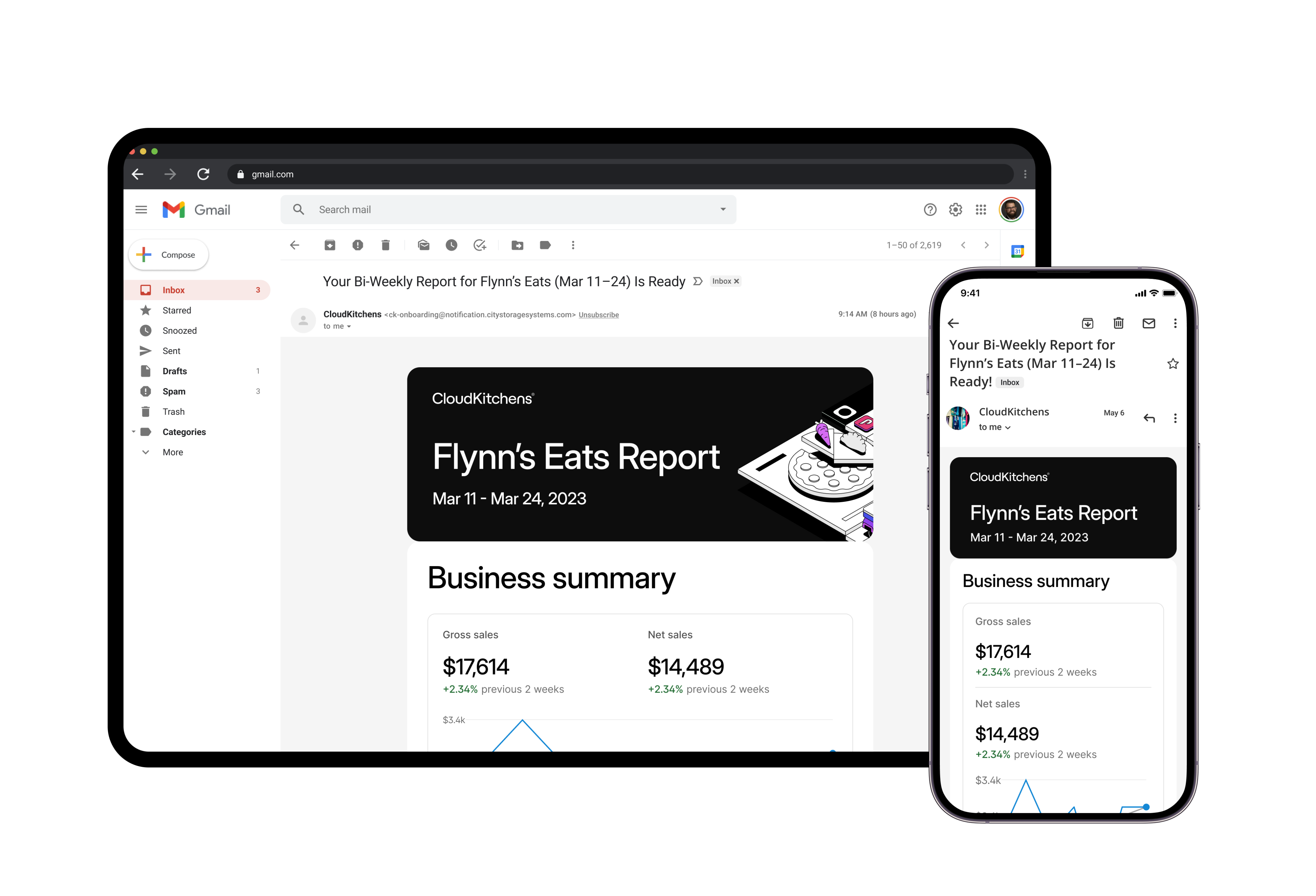
Automating Business Reports with AI-Generated Insights
See Project
→
See Project
→
More Projects
See Project
→
See Project
→


Work
Work
About
About
Improving inventory accuracy with a scan-first, location-based workflow
This project focuses on improving inventory operations in a fast-paced warehouse environment, where staff work across multiple tasks and frequent interruptions.
The existing system didn’t reflect how work actually happens, creating unnecessary opportunities for errors. The goal was to redesign the workflow to better align with real-world operations and improve inventory accuracy.
Lead Product Designer
Mobile Web App
2022
The problem
High order defect rates were impacting customers and business performance.
We were seeing consistently high defect rates, with controllable ODR staying above 4%, leading to poor customer experience, increased refunds, and operational inefficiencies.
Through our analysis, we identified a strong correlation between ODR and low inventory accuracy, which was hovering around 70%, making it a key driver of defects and a primary lever for improvement.
Understanding the real workflow
To better understand this gap, we studied active facilities through shadowing, live usability sessions, and hands-on observation so the redesign reflected interruptions, movement, and physical constraints.
The research showed that the errors were systemic, not individual. Across sites, the same themes repeated: people worked by location, the system forced manual translation, and interruptions made it easy for context to disappear, but the system did not support how work actually happened on the floor.
- Loose workflows: Users had too much freedom in critical tasks, which made it easy to skip steps or improvise around guardrails.
- No physical mapping: Staff had to translate between the warehouse and the interface manually because digital tasks were not anchored to real locations.
- Interrupted work: Flows assumed uninterrupted, linear work even though tasks were fragmented and staff regularly switched context midstream.
Mobile pop-up usability lab in facilities
Observed and worked as food runners within facilities
Cross-team collaboration
To address the gap , we partnered with the operations team to introduce a color-coded space tracking system with QR-coded racks.This created a direct mapping between the physical environment and the digital system:
- Each location became scannable and uniquely identifiable
- Users could anchor tasks to a specific location
- The system always had context of where actions were happening
This removed the need for manual mapping and significantly reduced ambiguity.
What we're building
To reduce operational errors, we focused on three high-impact operational moments:
- Receiving stock→ where inventory data was lost
- Order scan-out → where counts became inaccurate
- Stocktake → where tasks were too disruptive to complete
The solution
Make stocktake executable in the physical space
a. Aligning stocktake with physical space
Stocktake was rebuilt around the color-coded location system, making it fully location-based.Users count inventory by location, rather than navigating SKU lists.
Manage inventory
Count assigned location
Count unassigned location
b. Embedding related actions into the flow
While counting, users can:
- Move inventory
- Mark items as waste
This eliminates the need for separate workflows and reduces redundant work.
Move inventory
Waste inventory
Choose reason to waste
Guided, recoverable inventory receiving that reduce data entry errors
a. Supporting interrupted, real-world workflows
Receiving rarely happens in one continuous session. Staff are often interrupted or need to switch tasks midway.I introduced more granular statuses to reflect real progress:
- Items can be marked as arrived before being stocked
- Users can save progress and resume later
This allows users to work in fragments without losing context.
Incoming stocks
Scehduled shipment details
Receiving shipment details
b. Location-based, guided flow
Using the QR-coded rack system, I redesigned receiving as a location-based linear workflow.Users scan a location and are guided step by step, ensuring:
- Items are placed in the correct location
- Users follow a predefined sequence without needing to decide each step
This reduces reliance on memory and prevents common mistakes.
c. Capturing critical data at the source
I introduced expiration time input during receiving.By capturing this information at the moment items enter the system, we ensured more accurate tracking of inventory lifecycle.
Receiving shipment
Correct expiration date
Review items
Real-Time accuracy in scan-first, guided picking
a. Enforcing correct picking behavior
I designed a guided, scan-first flow that enforces the correct picking sequence.Users follow a structured path, reducing the chance of picking the wrong item or quantity.
b. Handling edge cases and maintaining data integrity
When fulfillment doesn’t match the order (e.g., missing or substituted items), users are required to record the reason.The system then updates inventory in real time based on these inputs, ensuring data stays accurate even in imperfect scenarios.
Scan-first order fulfillment
Correct quantity during fulfilling
Add unit not in order
Turning inventory management into a system-driven daily workflow
a. From manual planning → system-driven task list
Previously, stocktake required users to manually plan and initiate tasks.I shifted this to a pushed task list model:
- The system generates tasks automatically
- Users simply follow their daily task list
- Progress is saved, allowing easy continuation after interruptions
This removes planning overhead and ensures consistency across the team.
Task list
Count location task
Move inventory task
Impact
Improved inventory accuracy from ~70% to 95%+, while reducing controllable ODR (Order defect rates ) by over 50%. Enabled consistent, location-driven workflows across facilities, reducing reliance on individual memory and minimizing picking errors.

Other Projects
Improve Market Analysis Tool for AE Adoption
See Project
→
See Project
→
Create AI-Driven Menu Optimization Experience
See Project
→
See Project
→
Redesign CloudKitchens Customer Onboarding Experience
See Project
→
See Project
→
Serenity: From Mental Health Chatbot to Clinical Platform
See Project
→
See Project
→
Modular TV Feed Redesign for Facility Operations
See Project
→
See Project
→
Automating Business Reports with AI-Generated Insights
See Project
→
See Project
→
More Projects
See Project
→
See Project
→

